Bio-Kirigami Hydrogels Fold Themselves into Complex Human Tissue Shapes
Engineers at the University of Illinois Chicago have devised a 4D biofabrication method to grow curved living tissues autonomously.
By Letizia Giugliano
2 min readHuman-Edited, AI-Assisted
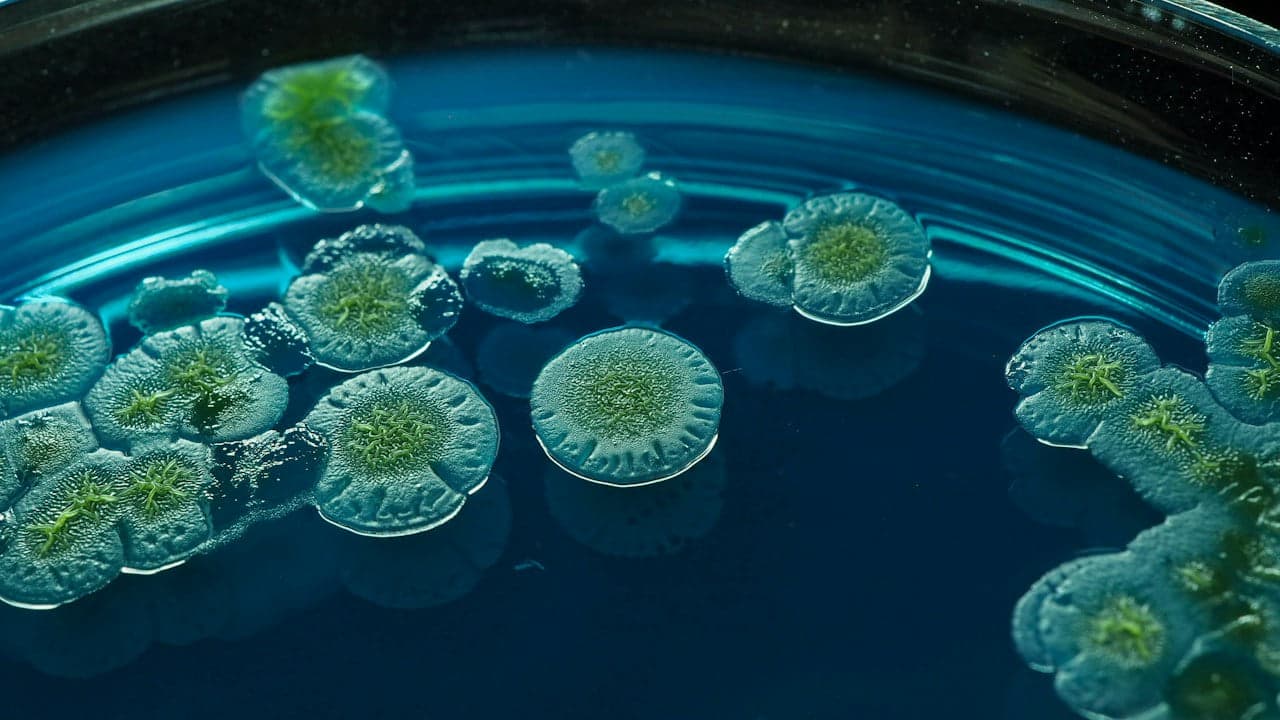
Researchers at the University of Illinois Chicago have developed a shape-shifting hydrogel platform inspired by kirigami to create complex three-dimensional tissue structures. Reported on October 19, 2026, the biofabrication invention uses patterned light to program living scaffolds that fold autonomously over time. The breakthrough addresses long-standing hurdles in engineering curved anatomical structures like cartilage, bone, and blood vessels.
Borrowing from paper-cutting art to shape living cells
Traditional tissue engineering has frequently struggled to recreate the intricate curves and contours found in native organs. To overcome these geometric limitations, biomedical engineers at the University of Illinois Chicago turned to kirigami, the traditional Japanese practice of cutting, folding, and unfolding flat sheets into dimensional forms. In a paper detailing this biomedical invention published in the journal Cell Biomaterials, the research team demonstrated how flat, cytocompatible hydrogels can be programmed to autonomously deform into complex anatomical curvatures, according to Phys.org.
“Our research demonstrates that kirigami-patterned, cytocompatible hydrogels can be engineered to autonomously bend, fold and transform into complex three-dimensional shapes.”
— Kaelyn L. Gasvoda, University of Illinois Chicago / Mayo Clinic
How patterned hydrogels execute four-dimensional transformation
The core of the technical innovation relies on four-dimensional (4D) biofabrication, where an engineered structure changes its shape over time after being produced. The team fabricated a dual-action scaffold using derivatives of gelatin and alginate, a natural polymer extracted from seaweed, as detailed by Phys.org. Using photolithography, the researchers cast patterned light onto the material to produce localized variations in crosslinking density across the hydrogel sheet.
Controlled expansion creates stable curvatures
This selective crosslinking allows the structure to transform without manual intervention. The outer border acts as a rigid boundary that retains its shape without expanding when placed in liquid culture medium, as reported by Phys.org. Meanwhile, the inner regions swell upon absorbing the fluid, driving the flat sheet to bend along the kirigami pattern while keeping cells alive and functional within the matrix. Lead author Kaelyn L. Gasvoda, who completed her doctorate at UIC before moving to the Mayo Clinic, noted that the system allows predictable control over how tissues fold into structures like tracheal or vascular arches.
Clinical translation and future animal trials
Developed in the laboratory of UIC professor Eben Alsberg alongside research associate professor Aixiang Ding, the platform lays the groundwork for customized regenerative implants and future patent protection. The researchers note that reproducing native curvatures is vital because tissue function is closely tied to physical architecture. With in vitro validation established, the next phase of the research focuses on evaluating the kirigami hydrogel constructs in animal models, paving the way for eventual clinical applications in wound repair and organ reconstruction, according to Phys.org.
Read also on The Patent: The non-slip shoes inspired by Japanese kirigami · Bye-Bye Microplastics: This New Plastic Is Recyclable and Ocean-Safe