Eureka!

Inventions

Engineers Solve Key Physical Hurdle in Exhaled Breath Diagnostics

Engineers at the University of Notre Dame have pinpointed why exhaled breath tests often produce inconsistent results, solving a problem that has stalled the diagnostic method for decades. The discovery provides the physical basis for a new invention in sample collectors, ensuring that noninvasive breath monitors can reliably detect pulmonary diseases without invasive procedures.
Makers

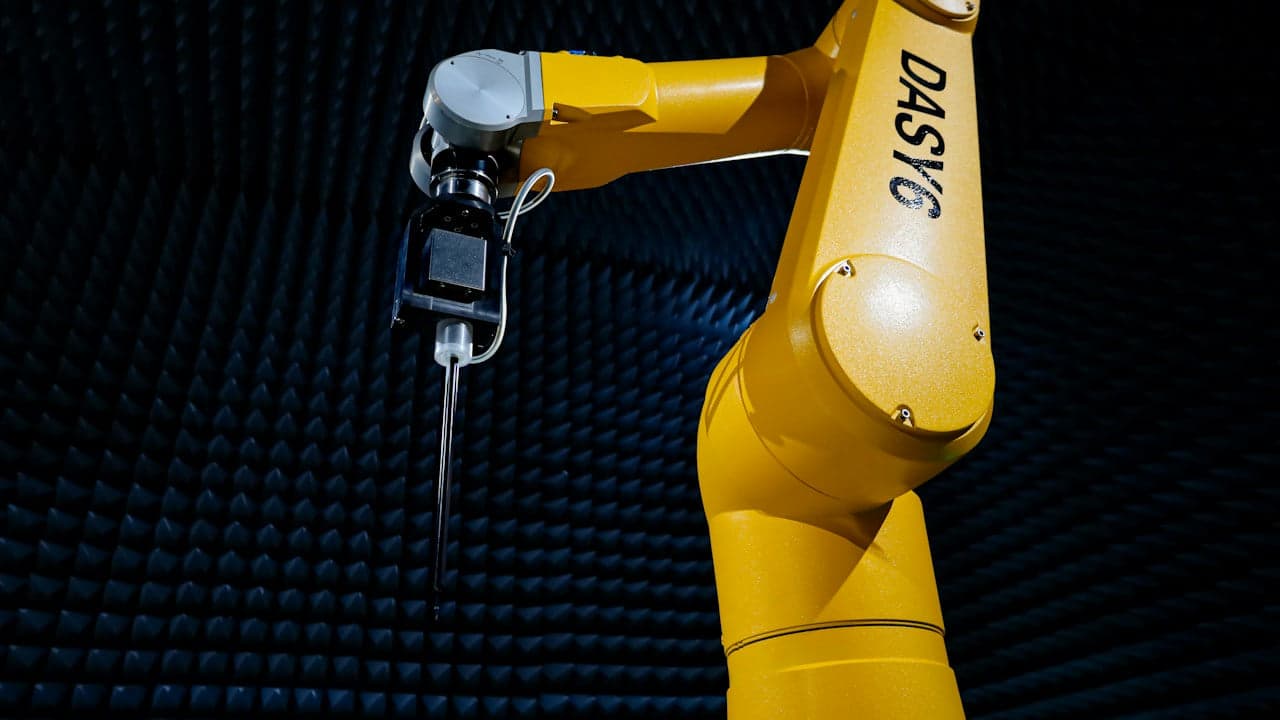
Dr. Kun Dániel Builds an AI-Guided Lockpicking Robot

Maker Dr. Kun Dániel has designed an autonomous lockpicking device that replaces the human touch with robotic actuators and artificial intelligence. The compact invention mounts onto an ordinary lock cylinder to manipulate internal pins through real-time physical feedback.

Letizia Giugliano

Inventions

Intestine-inspired biobattery generates eight times more power

Engineers at Binghamton University have developed a bacteria-powered biobattery that produces over eight times more electricity per unit volume than conventional flat designs. The biological invention copies the shape, material, and mechanics of the villi that line the human small intestine to keep electricity-generating microbes alive and active.

Giovanni Sapere

Makers

Ben Krasnow 3D prints a clear Einstein-Szilard refrigerator powered by flame

Maker Ben Krasnow has constructed a transparent, 3D-printed absorption refrigerator based on the historic Einstein-Szilard design, proving that an open flame can drive a cooling cycle without mechanical compressors. The project brings a classic thermodynamic invention to life, allowing observers to see the phase changes inside the pressurized fluid loop.

Giovanni Sapere

Inventions

Otter Warmer Keeps Newborns Warm During Hospital Blackouts

A portable newborn warmer built without soft mattresses or seams is helping rural clinics care for infants when electricity cuts out. Developed by United States nonprofit Design that Matters and Vietnamese medical device manufacturer MTTS, the medical device known as Otter treated over 800 newborns across three countries by January 2026.

Giovanni Sapere

Inventions

3D Printed Neural Implant Combines Brain Monitoring and Targeted Cooling

Scientists in Germany and the United Kingdom have developed a 3D-printed implant prototype that pairs brain activity recording with targeted cooling. Published in the journal Advanced Science, this biomedical invention targets drug-resistant focal epilepsy by combining electrical sensing and localized thermal suppression in a single miniature device.

Letizia Giugliano

Inventions

Acoustic Tube Guides Matter Through Air Using Ultrasound

A research team led by the University of Helsinki has demonstrated an invention that transports liquids, mist, powders, and electric discharge through open air without solid containers. Powered by ultrasonic waves emitted by 256 miniature transducers, the contactless channel creates an invisible boundary that guides matter horizontally in midair.

Giovanni Sapere

Stories

Vienna Chemists Turn Discarded Plastics into Solar Water Harvesting Sponges

Materials chemists at the University of Vienna have developed a method that converts aromatic plastic waste into functional polymer networks capable of extracting water from the air. Discarded packaging and consumer plastics capture ambient humidity and release liquid water when exposed to moderate solar heat, offering a circular approach to resource recovery.

Letizia Giugliano

Inventions

Bio-Kirigami Hydrogels Fold Themselves into Complex Human Tissue Shapes

Researchers at the University of Illinois Chicago have developed a shape-shifting hydrogel platform inspired by kirigami to create complex three-dimensional tissue structures. Reported on October 19, 2026, the biofabrication invention uses patterned light to program living scaffolds that fold autonomously over time. The breakthrough addresses long-standing hurdles in engineering curved anatomical structures like cartilage, bone, and blood vessels.

Letizia Giugliano

Makers

Making Photovoltaic Solar Cells at Home Using a Microwave Kiln

Semiconductor manufacturing typically requires specialized cleanrooms, but creator Dr. Semiconductor has demonstrated a practical benchtop method to fabricate working silicon solar cells at home. The process uses off-the-shelf chemicals and a standard microwave kiln to perform phosphorus diffusion on bare silicon wafers, achieving an initial conversion efficiency of roughly 5%.

Letizia Giugliano

Stories

NIST Microcomb Chip Uses Dual Lasers for Portable Atomic Clocks

Researchers at the National Institute of Standards and Technology and the Joint Quantum Institute have demonstrated a chip-based optical frequency comb powered by two lasers. This hardware innovation generates stable reference frequencies without the power-hungry external equipment that previously confined such instruments to laboratories. The development marks a critical step toward shrinking optical atomic clocks for autonomous vehicles, resource surveying, and environments where satellite timing is unavailable.

Giovanni Sapere

Makers

From Prototype to 1,750 Custom Badges for Hack The North

Scaling an electronic invention from a breadboard to hundreds of functional devices presents major manufacturing challenges for any creator. Hardware designer Nicholas Ficara managed this transition by fabricating 1,750 custom badges for Canada's Hack The North hackathon. His development process illustrates how disciplined iterative testing turns a bench prototype into reliable event hardware.

Letizia Giugliano

Stories

Ottawa Researchers Boost Organic Transistors via Microscopic Layer Tuning

A research group led by Benoit Lessard at the University of Ottawa has demonstrated that altering the microscopic architecture of thin-film transistors dramatically enhances electrical efficiency. This innovation relies on adjusting polymer compositions at the molecular level, cutting operational voltage down to 0.9 V while paving the way for wearable and biodegradable electronics.

Giovanni Sapere

Makers

Study Finds Plastics Generate Reactive Radicals in Water

A scientific study published in Nature has disproven the longstanding assumption that plastics remain chemically inert in aquatic environments. Researchers led by Naixin Qian discovered that common polymers generate reactive hydroxyl radicals upon contact with water, causing measurable damage to living cells.

Letizia Giugliano

Stories

Aurelius Mounts Archimedes Laser on American Rheinmetall Ox Robot

At the AUSA 2026 defense exposition, San Francisco technology developer Aurelius Systems showcased its Archimedes autonomous laser weapon integrated onto the Ox unmanned ground vehicle built by American Rheinmetall. The system is engineered to detect, track and neutralize hostile aerial drones in seconds to protect logistics operations in hazardous terrain. By combining directed-energy emitters with advanced robotics, the platform protects tactical supply lines without exposing human operators to battlefield hazards.

Giovanni Sapere

Makers

Optical Waveguides Turn Flexible Sheets into Dynamic Shape Sensors

Tracking the dynamic deformation of soft objects remains an engineering hurdle in virtual reality and robotics. To address this, researcher Qifan Yu and a team of investigators developed an invention that reconstructs surface movement using flexible light-guiding channels, according to a report by [Hackaday](https://hackaday.com/2026/10/15/using-optical-waveguide-arrays-to-make-sheets-sense-shapes/). The sensing sheet offers a self-contained alternative to bulky multi-camera rigs.

Letizia Giugliano

Inventions

Bye-Bye Microplastics: This New Plastic Is Recyclable and Ocean-Safe

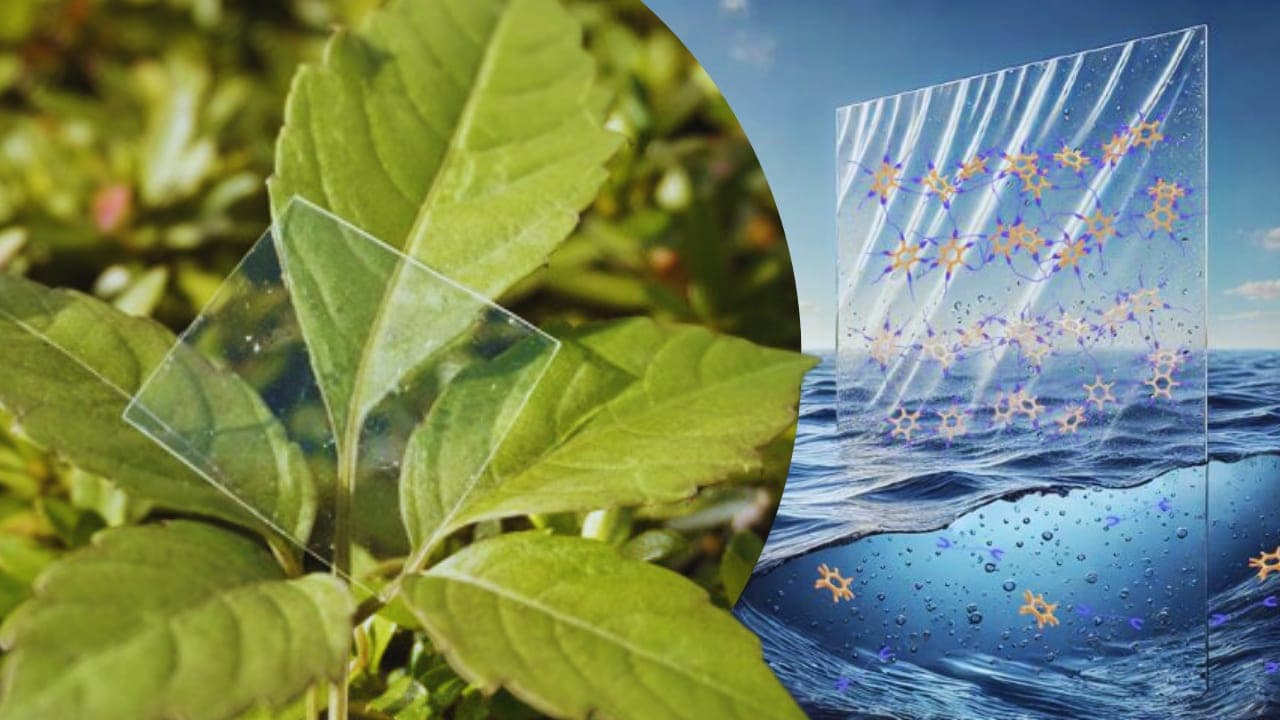
Every minute, the equivalent of two truckloads of plastic end up in the planet’s oceans. To date, it is estimated that between 75 and 199 million tonnes of plastic are already polluting the seas, threatening fish, coral and even human health. But a recent Japanese discovery could represent an…

Evgeny Novikov