Columbia Chemists Upgrade stroboSCAT Microscope to Track Single Quantum Particles
An intensity-cycling method lets researchers isolate individual electrons and quasiparticles moving through two-dimensional semiconductors
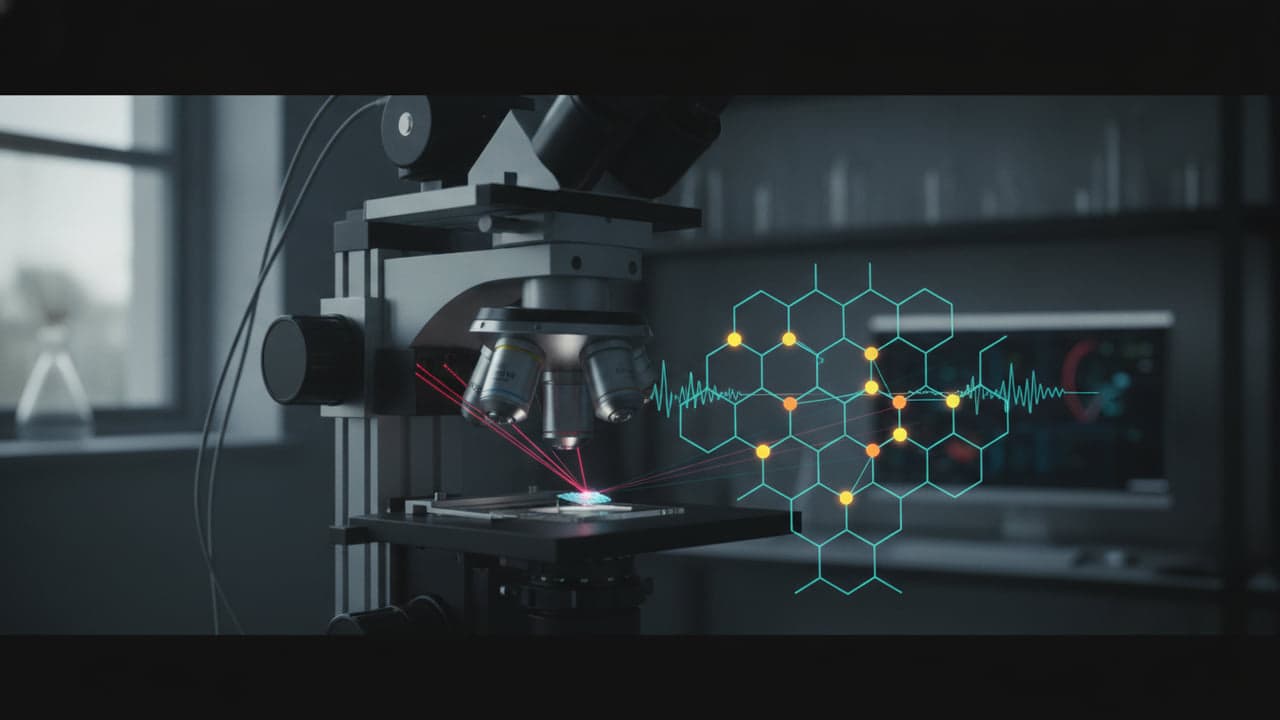
Chemist Milan Delor and graduate student Jack Tulyag at Columbia University have upgraded an optical imaging instrument called stroboSCAT to observe individual quantum energy carriers in real time. Described in a paper published in Nature Materials, the improved system filters measurement noise by cycling laser intensities, making it possible to isolate single electrons moving across two-dimensional semiconductors.
Cycling light intensity to isolate individual charges
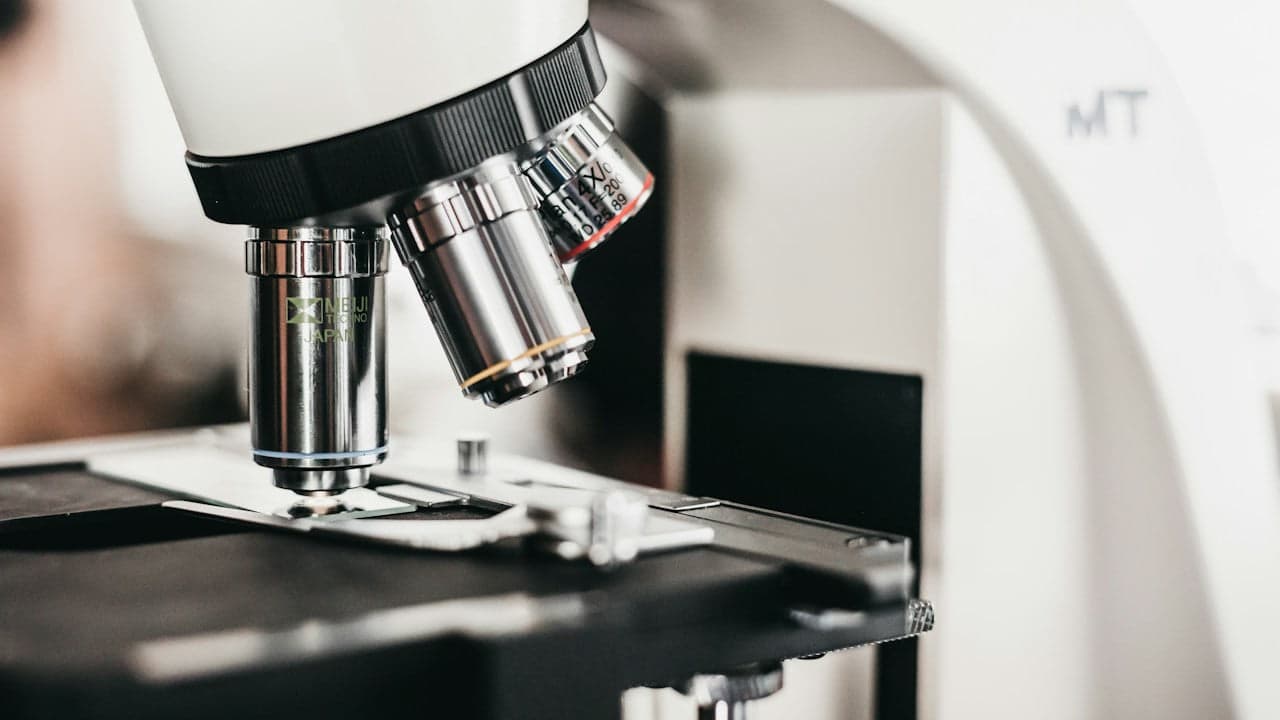
The latest stroboSCAT instrument, a groundbreaking innovation in nanoscale imaging, relies on strobe-like light pulses to film how energy moves through solid materials. Chemist and inventor Milan Delor first developed the microscope in 2019 while working as a postdoctoral researcher with Naomi Ginsberg at the University of California, Berkeley, as reported by Phys.org. Over several years, the Delor Lab at Columbia improved its temporal resolution to femtoseconds and spatial precision to a few nanometers, tracking entities ranging from electrons to charge-neutral quasiparticles like excitons and phonons. Previous iterations required high carrier densities, which caused individual particles to vanish into background noise as they dispersed across the sample.
“That's a breakthrough for me. We can obtain information about transport without worrying about artifacts from many-body interactions,”
— Milan Delor, chemist at Columbia University
A solution adapted from spectroscopy
To solve the noise problem, the team adapted a spectroscopic approach originally introduced by researchers at the University of Würzburg and the University of Ottawa. While the original method gathered spectroscopic data without spatial details, Delor and Tulyag applied the concept to spatial imaging by modulating the light intensity used to stimulate the material. This cycling allows the system to distinguish single quantum states from collective particle interactions as they travel through real space, as detailed by Phys.org. This invention eliminates interference caused by many-body artifacts, allowing researchers to record clean transport measurements in a 2D semiconductor.
Mapping defects and open instrument blueprints
Beyond observing single particles, the updated technique can isolate multi-particle dynamics, including two-particle and three-particle interactions. The researchers demonstrated this by mapping how crystal defects alter the local electronic properties of 2D materials and tracking light-induced phase transitions in a superatomic solid. Rather than securing a patent or restricting the intellectual property, Delor confirmed to Phys.org that the group is distributing the blueprints and operating software for the microscope to assist broader adoption across laboratories. Next, the Columbia team plans to study Cooper pairs, the paired electrons responsible for superconductivity, as well as macroscopic quantum condensates.
Read also on The Patent: UT Southwestern designs versatile 3D microscope for live cell imaging · Hopcopter Adds an Articulated Foot Pad for Rough Terrain