HP OmniBook Ultra 16 Debuts Nvidia RTX Spark Architecture for Local AI
The high-end workstation combines Blackwell graphics and unified memory to tackle demanding agentic models without cloud reliance.
By Letizia Giugliano
2 min readHuman-Edited, AI-Assisted
Workstation computing is shifting back to local hardware as hardware vendors package datacenter-level memory capacities into portable systems. HP has released its OmniBook Ultra 16, serving as the launch vehicle for Nvidia's new RTX Spark platform tailored for local artificial intelligence workloads. Tested by benchmarkers in October 2026, the device pairs custom multi-chiplet silicon with massive unified memory for demanding research and builder tasks.
A builder-class architecture for local computing
Nvidia and partner manufacturers have introduced RTX Spark systems to target builders, data researchers, and engineers seeking high-capacity graphical processing outside datacenter environments. According to benchmarks reported by The Register, the OmniBook Ultra 16 serves as an early showcase for this mobile technical innovation. While standard consumer laptops restrict graphical memory, RTX Spark configurations offer up to 128 GB of unified memory, allowing large artificial intelligence and machine learning models to execute directly on the client machine without external hosting services.
Inside the N1X system-on-chip and NVLink Fusion interconnect
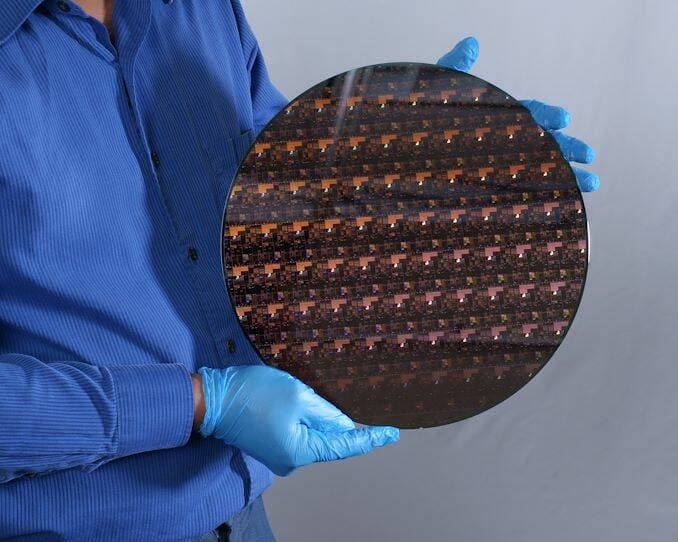
At the structural core of the platform is the N1X system-on-chip, an advanced multi-chiplet processing package engineered to integrate diverse processing silicon. As detailed by The Register, the package joins a central processing chiplet derived from MediaTek architecture with an Nvidia Blackwell graphics unit using the proprietary intellectual property of the NVLink Fusion interconnect. The highest-specification variant contains 20 CPU cores linked to a GPU with 6,144 CUDA cores, matching the core figure of an RTX 5070 graphics unit while gaining access to the shared, large-pool unified system memory.
Chassis engineering and thermal design
Managing the thermal signature of high-density silicon in a laptop format requires specialized physical architecture. The OmniBook Ultra 16 weighs 4.89 pounds inside an all-aluminum body equipped with an external top-mounted hinge mechanism. This placement directs heat exhaust away from the input surfaces, keeping high operating temperatures generated by the N1X chip clustered near the vent line rather than across the keyboard. Per The Register, the laptop integrates a 16-inch 2880x1800 OLED touchscreen capable of reaching 1100 nits of HDR brightness, driven by Cirrus Logic audio amplifiers and a low-profile membrane keybed.
Market positioning and the cost of memory density
The commercial barrier for builder-grade mobile hardware remains steep. Retail configurations for RTX Spark laptops start around $2,600 and escalate past $6,000 for top-tier configurations with maximum memory, reports The Register. The system offers extensive peripheral connectivity, including two 40 Gbps USB-4 interfaces, dual 10 Gbps USB-A ports, HDMI, and a MicroSD slot. Nvidia and partner Microsoft are positioning these units specifically for startup teams and developers running localized agentic software stacks who need Nvidia's CUDA software stack rather than alternative closed or non-standard GPU architectures.
Read also on The Patent: Aurelius Mounts Archimedes Laser on American Rheinmetall Ox Robot