Physicists Map Particle Motion in Primordial Quark-Gluon Plasma
Researchers from MIT and UCSB extend Einstein's Brownian motion framework to analyze how subatomic particles behave near the speed of light
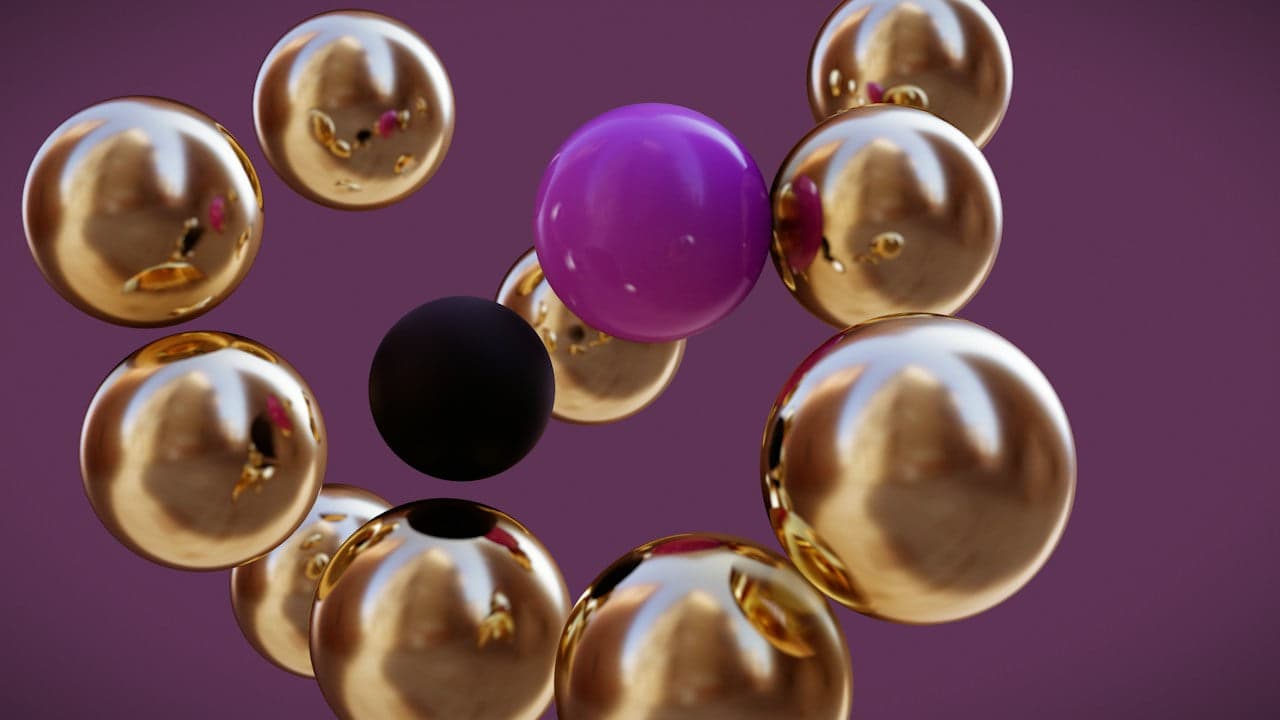
Physicists at MIT and the University of California, Santa Barbara, have formulated a theory predicting how relativistic particles travel through quark-gluon plasma, the dense fluid that filled the universe microseconds after the Big Bang. The theoretical innovation resolves a century-old limitation in classical physics by calculating the momentum changes of particles moving near light speed.
Extending Einstein's fluid dynamics
In 1905, Albert Einstein formulated a mathematical explanation for Brownian motion, the random jittering of pollen grains suspended in water first recorded by botanist Robert Brown in 1827. Working at the time as a patent examiner, Einstein demonstrated that this motion reflects microscopic interactions within a fluid, where drag counterbalances random collisions from surrounding molecules. While this model successfully characterizes standard liquids and gases, it falters when applied to relativistic particles traveling close to the speed of light, as reported by MIT News.
“Our result reveals a new source of information carried by heavy quarks in rare, unusually large changes in their motion.”
— Jean Du Plessis, MIT Center for Theoretical Physics
Calculating rare momentum kicks
To address this gap, theoretical physicists Jean Du Plessis of MIT's Center for Theoretical Physics and Bruno Scheihing-Hitschfeld of the Kavli Institute for Theoretical Physics at UCSB re-examined particle dynamics under extreme energy states. Their findings, published in Physical Review Letters, represent a notable scientific innovation that calculates the specific forces exerted on heavy quarks as they traverse high-energy fluids. Rather than following a standard bell-shaped probability distribution, fast-moving particles in these environments experience rare, unusually large shifts in motion that carry direct information about the medium's subatomic layout.
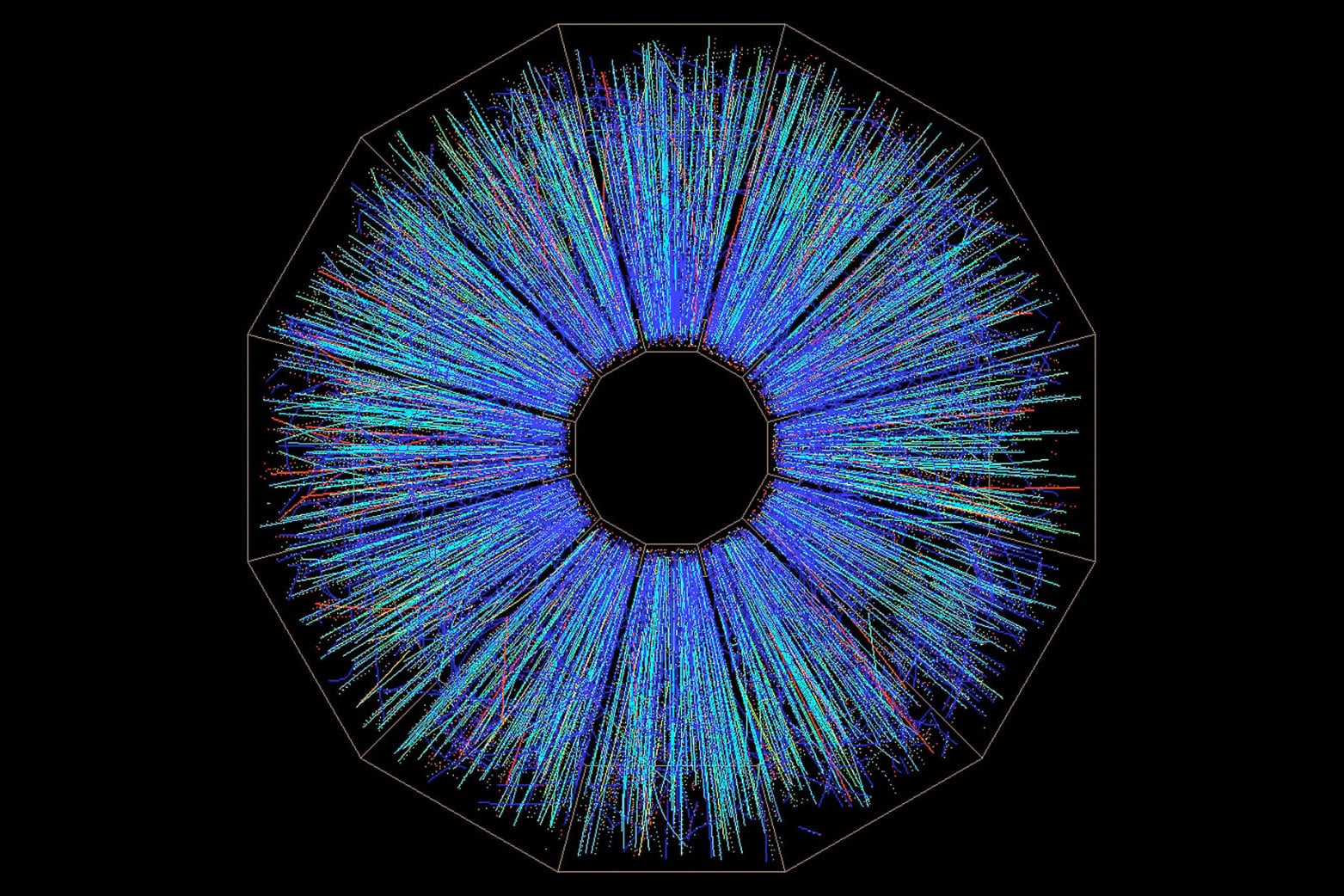 Photo: MIT
Recreating the early universe in accelerators
Quark-gluon plasma existed naturally across space for only a few microseconds after the Big Bang at temperatures exceeding one trillion degrees. Today, experimentalists recreate droplets of the fluid measuring roughly the size of an atomic nucleus at facilities such as the Relativistic Heavy Ion Collider at Brookhaven National Laboratory. By smashing gold ions together at near light speed, instruments like the STAR detector register the debris that streams out. The new formulation allows researchers to compare trajectory data from heavy quarks against theoretical predictions, establishing a structured way to determine the microscopic properties of matter during the universe's earliest moments.
Read also on The Patent: Quantum skyrmions on a chip survive after photon entanglement breaks down · Colloidal Anti-Spin Ice Created with Rotating Magnetic Fields
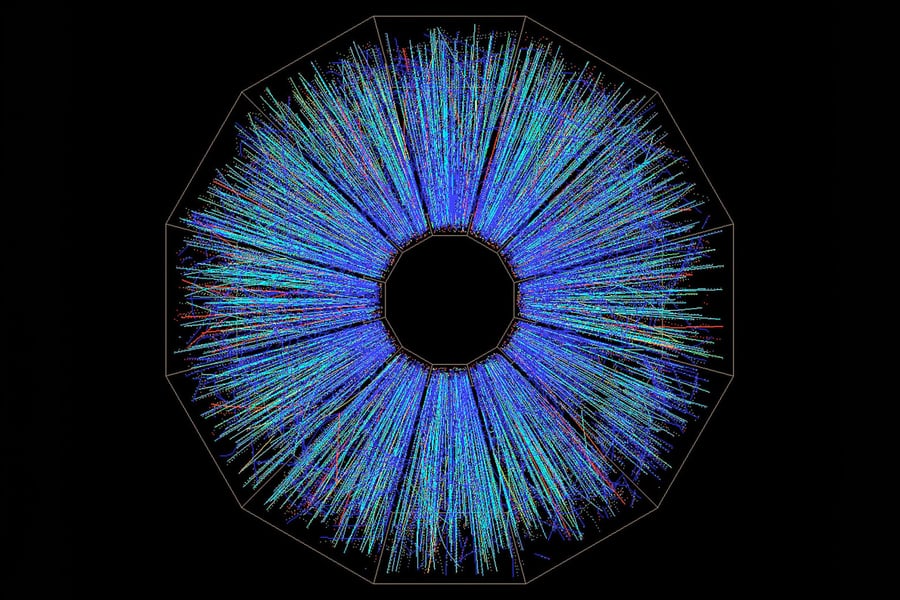 Photo: MIT