Ancient Siberian Tomb Reveals 2,800-Year-Old Evidence of Psychoactive Cannabis Use
Archaeologists in the Republic of Tyva uncovered 1,000 seeds and chemical traces in human hair inside an eighth-century B.C. Scythian burial mound.
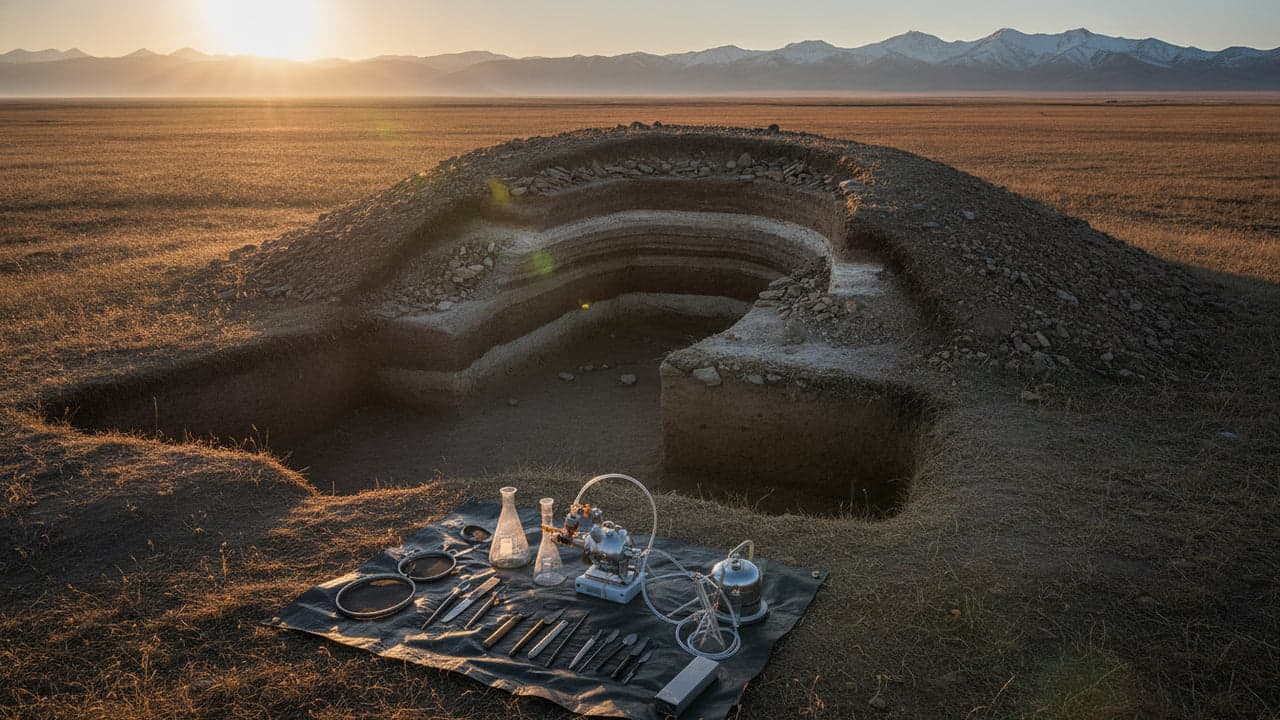
Archaeologists working in southern Siberia have identified the oldest directly dated physical evidence of psychoactive cannabis consumption, dating to the early eighth century B.C. The discovery, stemming from analytical innovation applied to preserved organic materials, connects nearly 1,000 seeds with chemical traces found directly in human hair from a royal burial mound.
Seeds and human hair from an eighth-century B.C. mound
An international research team led by Dr. Gino Caspari, an archaeologist affiliated with the University of Bern and the Max Planck Institute of Geoanthropology, excavated an elite Scythian burial site in the Republic of Tyva. During excavations of the tomb, the team recovered roughly 1,000 cannabis seeds from the central burial chamber, as reported by ScienceDaily, shedding new light on an ancient ritual innovation on the steppe.
To establish an exact chronology, researchers conducted radiocarbon dating on six individual seeds. The results placed the deposition firmly in the early eighth century B.C., making it the earliest directly dated material record of the plant linked to funerary ceremonies on the Eurasian steppe.
“This study is particularly insightful because it combines the analysis of plant remains with molecular traces in the human body.”
— Dr. Gino Caspari, Institute of Archaeological Sciences at the University of Bern
Chemical traces confirmed through high-resolution spectrometry
Uncovering ancient plant remains does not automatically prove consumption, because wild cannabis was widespread and gathered for oil and fiber. To test whether the occupants absorbed the plant's psychoactive compounds, the scientists analyzed preserved human hair retrieved from the grave.
Using high-resolution mass spectrometry, an analytical innovation applied to archaeology, the researchers detected clear chemical signals corresponding to cannabinol (CBN), a breakdown product formed when tetrahydrocannabinol (THC) oxidizes. They also identified weaker signals matching the molecular mass of THC itself, confirming that individuals buried in the mound had ingested or inhaled active cannabinoids before death.
Funerary rites, animal sacrifices and unanswered questions
The archaeological context points to a high-status ceremonial setting. Prior research at the burial mound located the remains of 18 sacrificed horses, and continued work uncovered dozens more equine skeletons alongside scattered human bones, indicating large-scale ritual sacrifice.
While the chemical traces in the hair establish psychoactive use, the findings published in the journal Science leave certain mechanisms unresolved. The scientific data cannot confirm the exact dosage consumed or whether the cannabis was inhaled via burning coals or ingested through other preparations. Excavations across later Central Asian sites have demonstrated the invention and use of heated stones and dedicated braziers to produce inhalable smoke, but verifying whether early Scythians in Tyva shared identical methods awaits further excavation of related grave goods.
Read also on The Patent: Spear Wound in Shanidar Cave Points to Oldest Wooden Weapon Attack · UV Scans Reveal Calcite Varnish Protecting Chauvet Cave Art