Beijing researchers design bone scaffolds in 12 seconds with AI
ScaffoldForge cuts computation time from over two hours to seconds using a single graphics processing unit.
By Giovanni Sapere
1 min readHuman-Edited, AI-Assisted
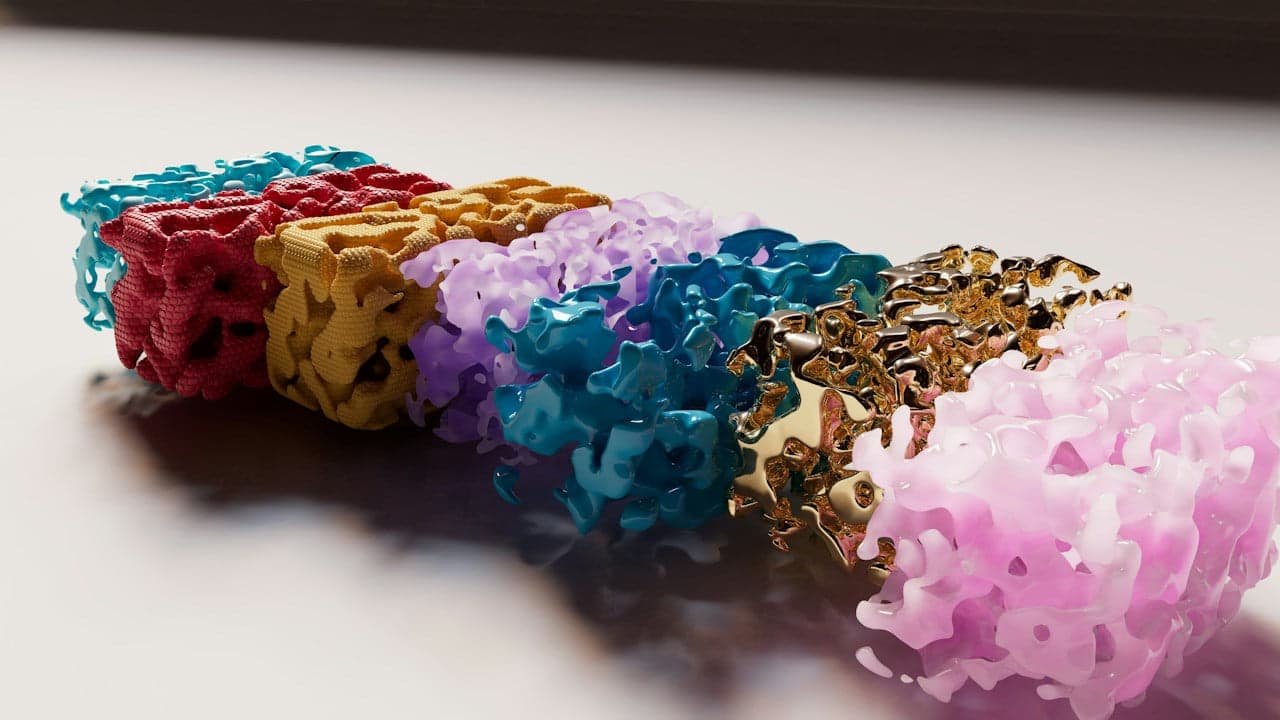
Engineers and medical researchers at Beijing Rehabilitation Hospital, affiliated with Capital Medical University, have introduced ScaffoldForge, a generative artificial intelligence system for bone repair. The tool designs customized bone scaffolds in roughly 12 seconds, shifting a calculation process that previously required hours of computing time.
From hours of computation to seconds on one GPU
Developing patient-matched structures for skeletal recovery traditionally relies on iterative simulation algorithms. According to a report by VoxelMatters, conventional topology optimization required 8,400 seconds, or 140 minutes, to calculate a single scaffold design.
By contrast, the ScaffoldForge model executes the entire design run in about 12 seconds on a single graphics processing unit (GPU). That acceleration represents a calculation speed roughly 700 times faster than the previous computational workflow, marking a major healthcare innovation.
Generative architecture for structural design
The technical achievement rests on generative artificial intelligence, which predicts load-bearing structures without executing thousands of cyclic numerical evaluations from scratch. As reported by VoxelMatters, the work at Beijing Rehabilitation Hospital evaluated machine-learning architectures, including TriTopo-LGDM, to overcome the processing delays inherent in classical biomechanical modeling.
This algorithmic invention addresses a persistent bottleneck in clinical bioengineering, where tailoring complex geometries to fit individual anatomical defects has often been slowed by heavy mathematical processing, opening new avenues for medical intellectual property.
Clinical implications for skeletal repair workflows
Reducing modeling latency from over two hours down to seconds allows surgical teams to evaluate structural configurations almost in real time. The data published by VoxelMatters indicates that ScaffoldForge demonstrates how targeted computational models can streamline surgical preparation without requiring dedicated supercomputing clusters.
Further deployment will depend on validating the mechanical integrity and biological integration of the scaffold structures generated through the model under real-world clinical requirements, an advancement tracked closely across patent news.
Read also on The Patent: Trilateral patent offices meet in Vienna on Global Assignment and AI · OpenAI Models Generate Proofs in Mathematics, Computing and Quantum Physics