IBM plans 1,040-qubit modular quantum system for 2027
The system links two Nighthawk r3 processors using chip-to-chip couplers to scale computing capacity.
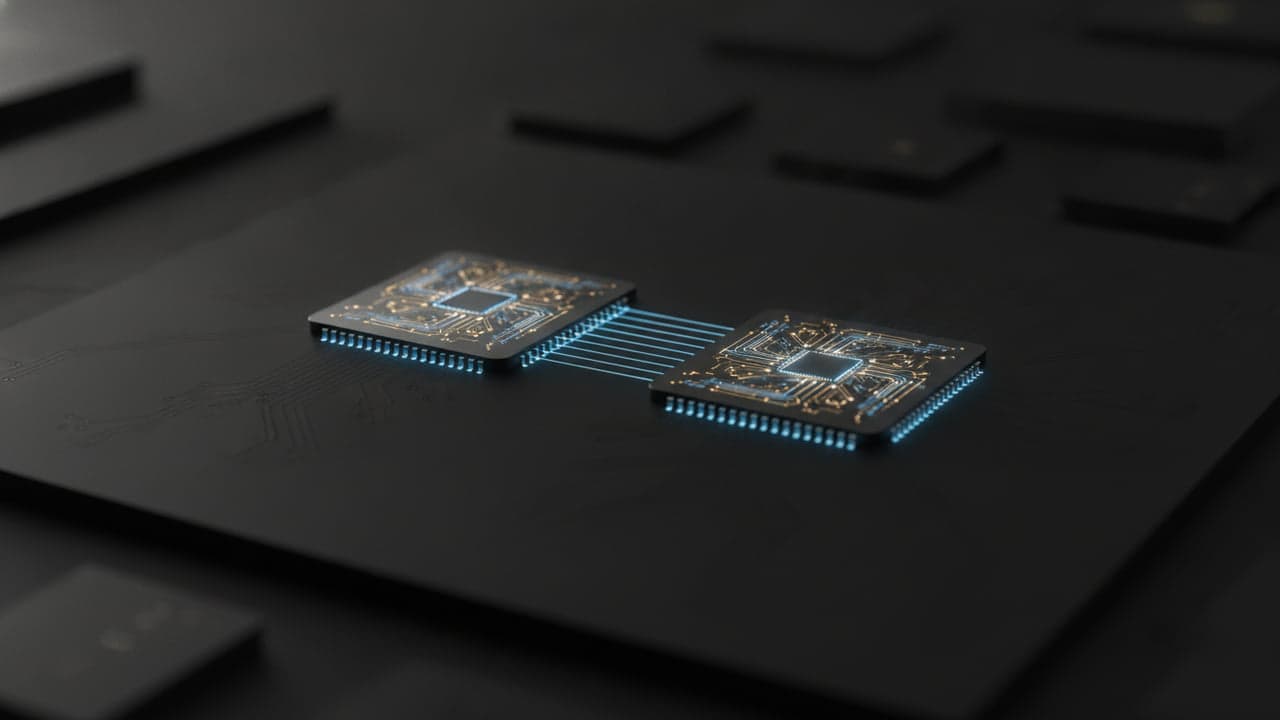
IBM will connect two next-generation quantum processors to assemble a single system with 1,040 qubits in 2027. The project relies on the company's upcoming Nighthawk r3 architecture, where physical couplers join separate chips into one machine. This hardware innovation addresses a core limitation in quantum development by expanding capacity without building a single, fragile processor die.
Chip-to-chip links replace single silicon dies
Building quantum chips with larger numbers of qubits creates severe manufacturing and noise challenges. To bypass the limits of single-die fabrication, IBM designed the Nighthawk r3 architecture to support multi-chip communication, as reported by Interesting Engineering. Each Nighthawk r3 chip includes 2,034 physical qubits and 520 programmable qubits, maintaining the square-grid connectivity established in earlier hardware iterations.
The key hardware mechanism is a set of 10 chip-to-chip connectors known as l-couplers. These components allow quantum processors to transfer quantum states directly to one another. During earlier trials between two Nighthawk r1 chips, four l-couplers achieved a state transfer fidelity of 99.3 percent. Engineers are now aiming for a fidelity threshold of 99.9 percent before linking two 520-qubit r3 processors into the planned 1,040-qubit system in 2027.
Execution speeds and industry trials on Nighthawk r2
The planned 2027 system builds on operational data gathered from the earlier Nighthawk r2 processor, which launched in September 2026. That model delivers up to 100,000 samples per second and handles computations running more than 7,500 quantum operations across 120 qubits. External partners have run more than 34 billion circuits on the hardware to test commercial and scientific problems, according to Interesting Engineering.
German energy supplier E.ON reported a 15-fold speed gain when applying quantum machine learning models to electricity grid optimization. In academic simulations, Oak Ridge National Laboratory tested magnetic materials on the r2 hardware, completing calculations 12 times faster than on IBM's older Heron platform. Software company Algorithmiq also recorded an eightfold runtime acceleration compared with its original Heron tests while running circuits that classical supercomputers struggle to simulate.
Hybrid quantum computing and high-performance clusters
Hardware scaling alone does not resolve calculation bottlenecks, because quantum workloads require classical computing to evaluate errors, process noise, and interpret measurements. IBM has tied its quantum computing systems to classical high-performance computing clusters through an updated Quantum Platform, notes Interesting Engineering.
This hybrid setup showed measurable gains during tests with research institutes. Scientists from RIKEN and IBM completed an existing quantum diagonalization workflow five times faster while running 100 times more computations than during their initial study. In a separate biomedical project, RIKEN and the Cleveland Clinic analyzed 608 million samples to model complex biological structures. Automated coordination between classical servers and quantum processors reduced processing time by a factor of 33, serving as a testbed on IBM's path toward fault-tolerant computing.