Rare Quantum Lattice Assembled from Propeller-Shaped Organic Molecules
Researchers synthesize a diatomic Kagome lattice exhibiting topological edge states for future low-power electronic devices
By Letizia Giugliano
2 min readHuman-Edited, AI-Assisted

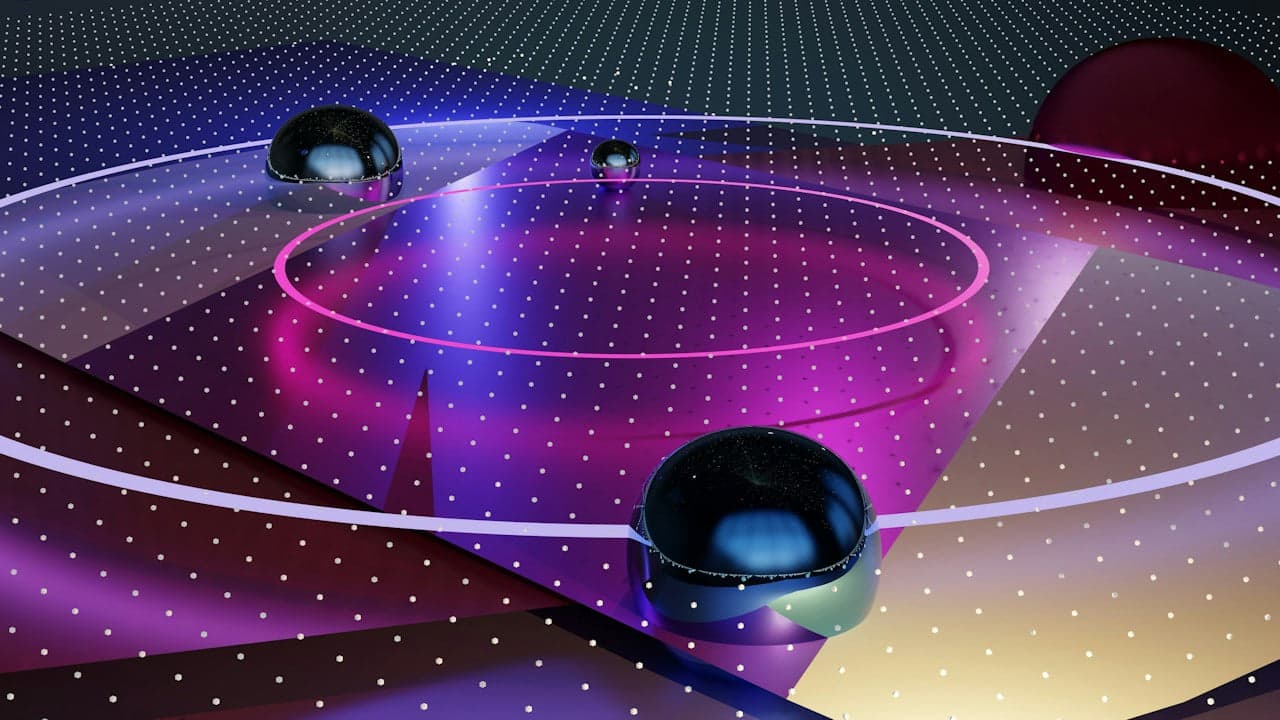
An international research team has created a rare two-dimensional diatomic Kagome lattice by assembling propeller-like organic molecules. Published in Nano Letters on September 2, 2026, the discovery demonstrates that organic molecular assemblies can support topological quantum states, widening avenues for future electronic design.
Merging honeycomb and Kagome geometries
Topological quantum materials have traditionally remained the domain of inorganic compounds, but this new molecular innovation proves that organic assemblies can host similar electronic phenomena. Researchers from Japan’s National Institute for Materials Science (NIMS), several Japanese universities, and Germany’s Kiel University assembled a rare structural hybrid known as a diatomic Kagome lattice, as reported by Interesting Engineering. The geometry merges the hexagonal pattern of honeycomb lattices, seen in single-layer graphene, with the triangular and hexagonal layout of a traditional Japanese basket-weaving design known as Kagome.
Overcoming weak molecular interactions
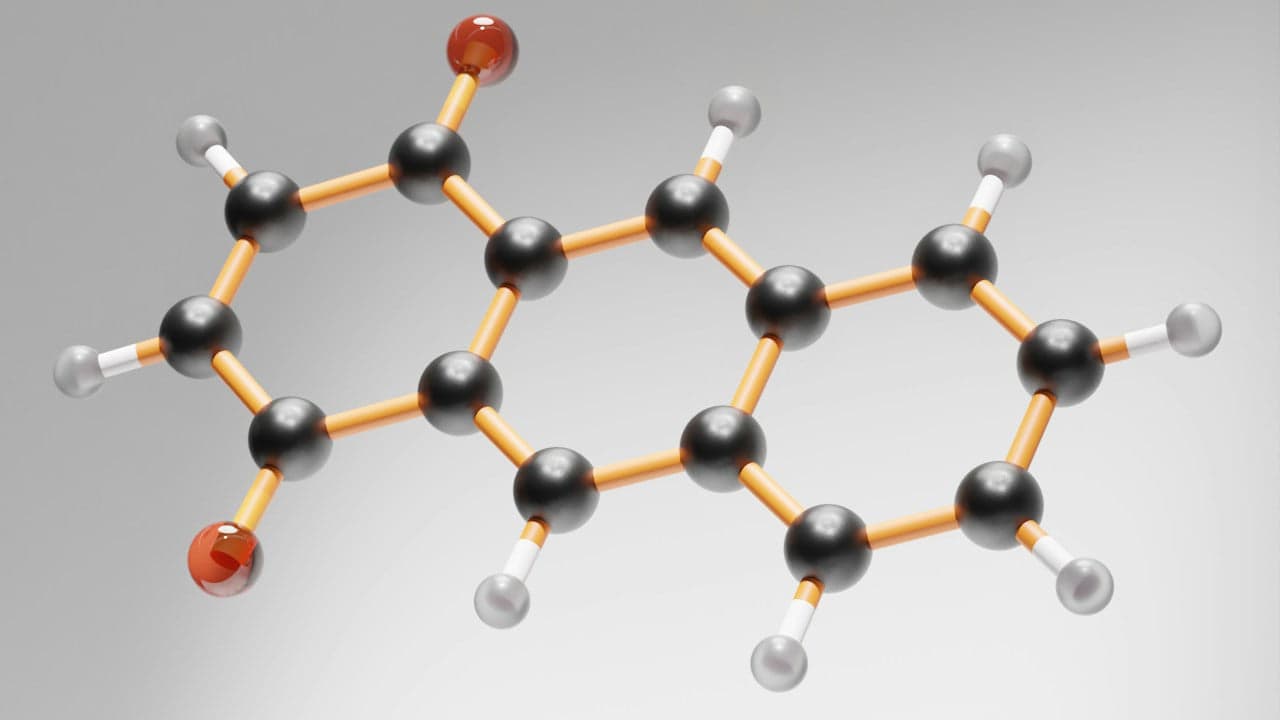
Organic molecules offer significant design versatility, yet their electronic interactions typically couple too weakly to produce exotic quantum behavior. To overcome this limitation, the research team behind the invention used derivatives of triptycene, a molecule characterized by three planes arranged in a propeller-like configuration, according to Interesting Engineering. These geometric planes establish direct contact with adjacent units, generating the electronic coupling required to sustain stable quantum properties across the assembly.
Detecting topological edge states
Using a scanning tunneling microscope, the researchers analyzed the physical assembly and observed electronic states concentrated strictly along the boundaries where the lattice meets its surroundings. Subsequent theoretical analysis confirmed that these boundary phenomena are topological edge states rooted in the mathematical structure of the lattice, as detailed by Interesting Engineering. Because these states remain confined to the borders rather than dispersing throughout the interior, they confirm that the organic structure exhibits true topological behavior.
Prospects for electronic switching and quantum materials
The deliberate realization of topological edge states in molecular structures provides a pathway toward technologies relevant to advanced quantum computing and fast electronic switching, opening valuable prospects for future patent applications and intellectual property in molecular hardware. While room-temperature loss-free energy transport and ultrafast optical switches remain theoretical targets requiring further study, the team intends to examine whether related molecular variants can switch between semiconductor-like behavior and superconductivity, as highlighted by Interesting Engineering.
Read also on The Patent: E-NNOVATE International Innovation Summit 2025 · Two youtubers managed to film the speed of light