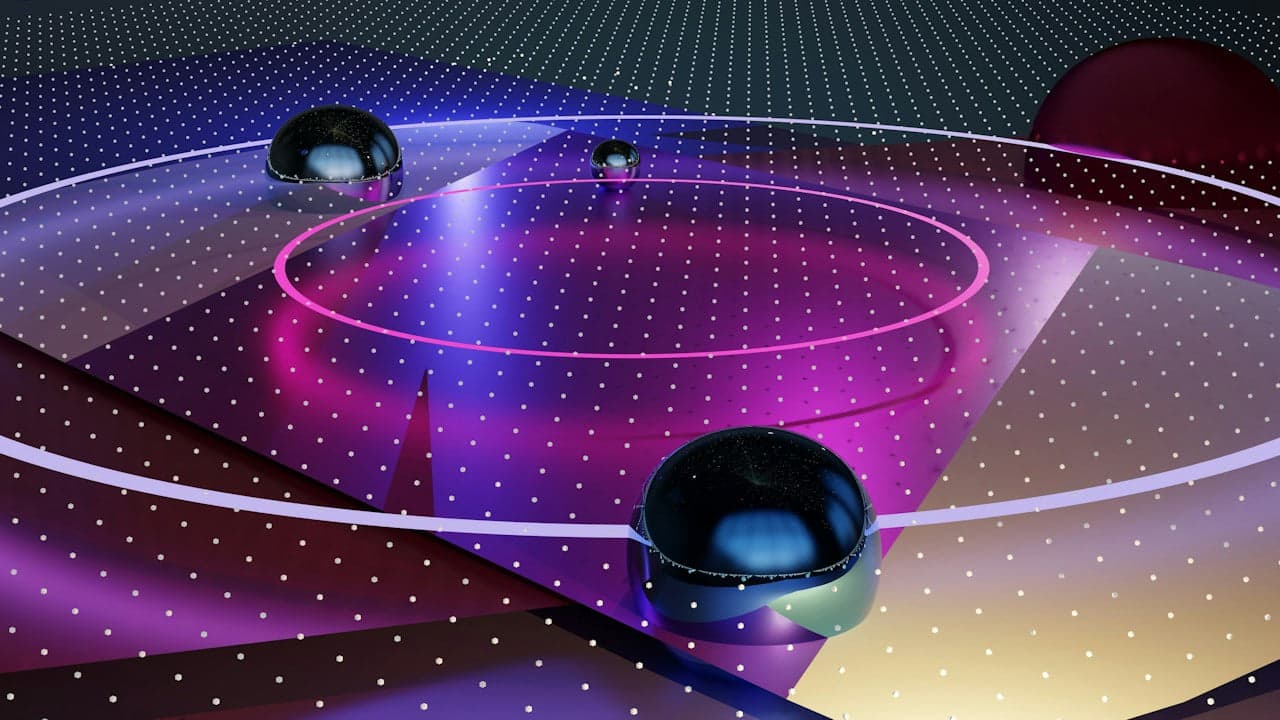
KTH Physicists Build Programmable Photonic Chip to Uncover Topological Stability
The light-based device isolates resilient wave behaviors and exceptional points in lossy optical systems using reference beams.
By Giovanni Sapere
2 min readHuman-Edited, AI-Assisted
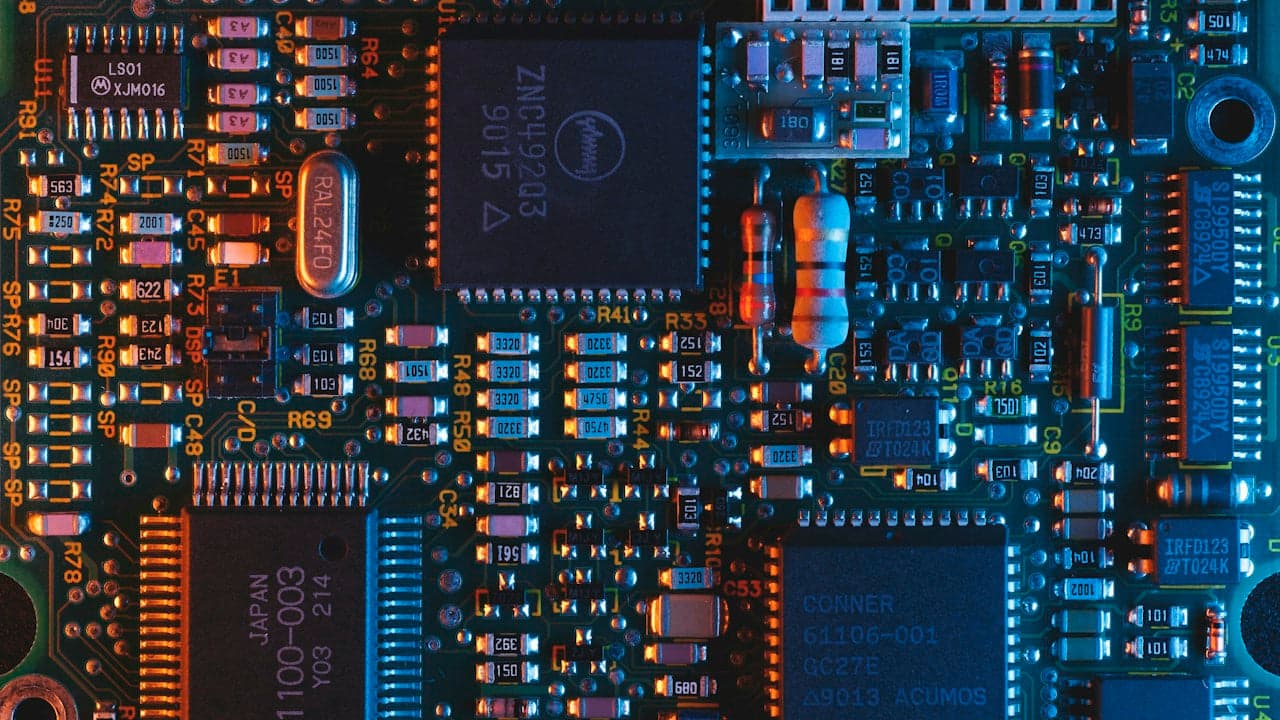
Researchers at KTH Royal Institute of Technology have demonstrated a programmable photonic chip capable of detecting stabilizing topological properties in light-guiding systems. Reported on October 18, 2026, the experimental method allows physicists to identify wave behaviors that resist structural flaws under realistic energy-loss conditions.
Detecting robust wave states in light-based hardware
In optical fibers and integrated photonic circuits, tiny manufacturing defects or environmental noise can scatter photons and alter their path. To prevent these disruptions, researchers explore topological properties, which are characteristics of wave motion that remain unchanged even when a system experiences physical deformation. This physics innovation was demonstrated by a team at KTH Royal Institute of Technology and published in Physical Review Letters, as documented by Phys.org.
Study co-author Associate Professor Ali Elshaari compares topology to a physical knot tied in a rope. The knot maintains its structural form if the rope is shaken, twisted, or stretched, coming undone only if the rope is cut. According to the study reported by Phys.org, certain optical architectures support analogous topological knots that protect light signals from scattering caused by physical imperfections.
“We use a mathematical trick to run the lossy system on the chip without actually losing the signal”
— Andrea Cataldo, doctoral student at KTH Royal Institute of Technology
How the interferometric chip preserves signal integrity
Real-world devices inevitably suffer from dissipation, meaning they lose energy during operation. Lead author and doctoral researcher Andrea Cataldo noted that such losses generally make stable topological signatures difficult to observe. To solve this problem, the team implemented a mathematical protocol on a programmable optical chip that mimics an energy-losing environment while preserving signal integrity, as detailed on Phys.org.
The device measures optical signals by comparing outgoing light against stable reference beams, working much like tuning a musical instrument against a standard acoustic note. This interferometric setup allowed the researchers to distinguish knotted topological states from conventional wave transmission. Furthermore, the light-based invention identified an exceptional point, a specific parameter threshold where dissipative physical systems exhibit non-standard wave interactions, according to Phys.org.
Intellectual property aspects and technical implications
Because the photonic circuit is fully programmable, researchers can configure a single chip to test multiple operational conditions without fabricating separate hardware for each test. The peer-reviewed findings, also cataloged under arXiv identifier 2609.38352, do not disclose a published patent filing or an active patent application for the hardware configuration, according to the report by Phys.org.
The measurement method provides a pathway to evaluate resilient components for optical networks, electronic circuits, and quantum devices. By enabling direct readout of topological features despite dissipation, the research supports the development of optical hardware designed to remain stable against physical defects, as reported on Phys.org.
Read also on The Patent: Two youtubers managed to film the speed of light · An experiment to ‘measure’ the speed of light with a chocolate bar