Raytheon develops optical processor to compute data with light for DARPA
The defense contractor secures a Phase 1 award under the PICASSO program to remove electronic conversion delays in military sensors
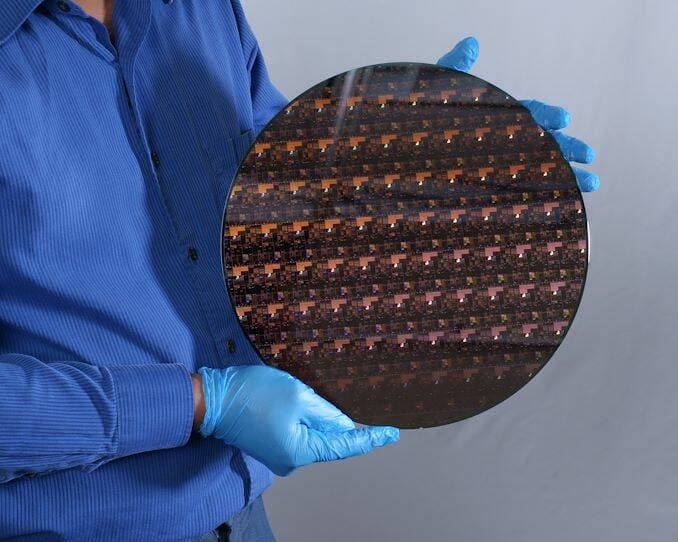
Raytheon has begun work on an optical processor designed to process incoming data entirely with light for United States military systems. The project aims to eliminate the delay caused by converting optical inputs into electrical signals. Funded under a Phase 1 award from the Defense Advanced Research Projects Agency, the invention could speed up threat detection in contested environments.
Removing the electronic conversion step
Most modern photonic circuits do not handle computing tasks on light alone. Instead, systems convert incoming optical signals into electrical data before running calculations, which introduces latency and increases system complexity. According to Interesting Engineering, the optical processor under development at Raytheon aims to process signals directly within the optical domain. Keeping data in light waves helps preserve signal strength while cutting the time needed to interpret dense streams of incoming information, marking a promising invention for real-time data handling.
DARPA backs integrated photonics research
The research initiative runs under the DARPA program known as PICASSO, short for Photonic Integrated Circuit Architectures for Scalable System Objectives. The agency wants photonic integrated circuits that can scale across multiple defense platforms, as reported by Interesting Engineering. Raytheon's Advanced Technology division is leading the engineering effort, relying on its background in radio frequency systems and photonics manufacturing. Software maker Synopsys is supplying simulation and design tools to model the circuit behavior before the team builds physical test units.
Targeting radar and electronic warfare
Military platforms face an influx of data from radar arrays and electronic warfare equipment that operate in crowded electromagnetic bands. Even brief processing lags can limit how quickly human crews react to incoming threats, according to Interesting Engineering. This optical computing innovation could help defense sensors identify targets and adjust countermeasures faster, while also reducing the physical footprint of processing hardware on board aircraft, naval vessels, or systems deployed in space.
What remains to be proven
The hardware remains in an early stage of research. As noted by Interesting Engineering, Raytheon has not announced a formal deployment timeline or published specific operational benchmarks. The immediate focus of the Phase 1 contract is to demonstrate that all-optical processing can operate reliably under harsh defense conditions. Further testing will determine whether the architecture can handle complex battlefield sensor workloads and artificial intelligence tasks before moving toward operational military adoption.
Read also on The Patent: Stanford Engineers Transmit Wireless Data Using Ambient Thermal Noise · HP OmniBook Ultra 16 Debuts Nvidia RTX Spark Architecture for Local AI