Ceramic Cell Doubles Clean Hydrogen Yield from Industrial Steam
Chemical engineers at the University of Groningen have developed a self-assembling ceramic electrolyzer that runs for 500 hours without degrading.
By Letizia Giugliano
3 min readHuman-Edited, AI-Assisted
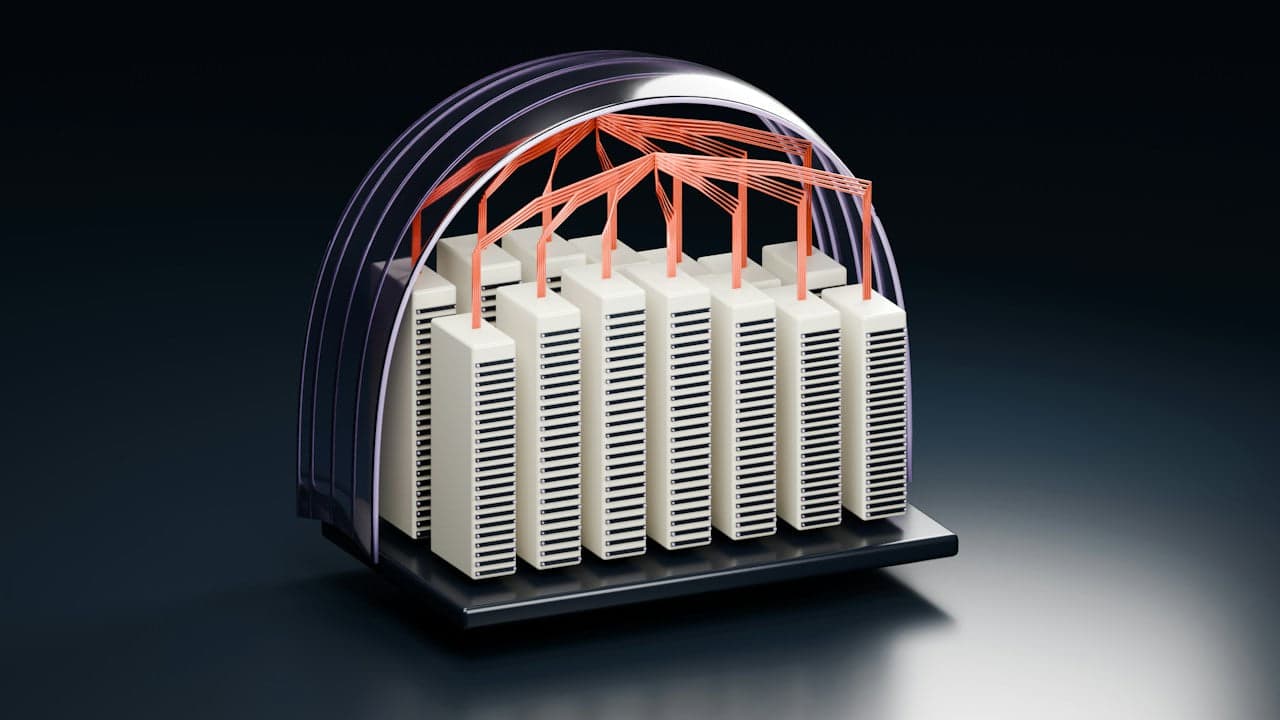
Chemical engineers at the University of Groningen have developed an invention that doubles the production of clean hydrogen from steam without requiring extra electrical power. The system, detailed in the journal Energy and Environmental Science, operates at high temperatures to split water vapor directly into pure hydrogen gas, providing heavy industry with an efficient alternative to fossil-fuel-derived hydrogen.
Extracting hydrogen from steam inside industrial plants
Most industrial hydrogen is currently produced by reforming natural gas, a process that releases large volumes of carbon dioxide. Chemical facilities rely on significant amounts of the gas to refine fuels, synthesize fertilizers, and manufacture plastics. Conventional liquid water electrolyzers demand substantial electricity to divide liquid water into hydrogen and oxygen, presenting an energy-intensive barrier for industrial sustainability.
To address this challenge, chemical engineers at the University of Groningen designed a Protonic Ceramic Electrolyzer Cell (PCEC), an invention reported by Interesting Engineering. Unlike standard liquid systems, PCECs process water vapor at intermediate temperatures between 400°C and 650°C, matching the thermal exhaust conditions already generated inside chemical plants.
“We discovered a previously overlooked synergy between membrane and electrode materials. Our research initially had a different direction, but our first findings made us think of a completely new path.”
— Dr. Vassilis Kyriakou, lead researcher at the University of Groningen
How the ceramic membrane separates pure hydrogen
The core of the PCEC relies on an ion-selective ceramic membrane. When steam enters the cell and encounters electrical current, it breaks down into oxygen and positively charged hydrogen ions, known as protons. Because only hydrogen protons are small enough to navigate the pores of the ceramic material, other elements remain on the opposite side of the barrier.
Once protons cross the membrane, an opposing negative charge allows them to gain electrons and recombine into molecular hydrogen (H2). According to Interesting Engineering, this selective migration isolates the hydrogen completely from other gases. As a result, the device eliminates the expensive purification steps required by conventional electrolyzers.
A self-assembling perovskite electrode
A recurring technical bottleneck in PCEC design has been finding an electrode capable of surviving harsh, high-temperature conditions without losing catalytic speed. A research team led by inventor Dr. Vassilis Kyriakou resolved this by creating a self-assembling electrode based on a perovskite oxide matrix.
When researchers heated the assembly in ambient air, ions migrated across the interface connecting the membrane and the electrode. This spontaneous movement caused praseodymium oxide nanoparticles to sprout across the surface. To increase efficiency, the team subjected the surface to an acid wash, multiplying the number of active catalyst sites across the material.
Efficiency gains and future deployment
The resulting electrochemical innovation demonstrated notable resilience during laboratory tests. The modified cell completed more than 500 hours of continuous operation without showing any measurable loss in operational stability, according to Interesting Engineering.
During testing, the device converted more than 95 percent of the supplied electric current directly into hydrogen, doubling the production output achieved by previous ceramic designs. By integrating directly with factory waste heat, the design provides an operational model for industrial Power-to-X processes looking to phase out natural gas reforming, opening new avenues for patent filings and clean-tech commercialization.
Read also on The Patent: Chiral Ruthenium Catalyst Separates Mirror-Image Molecules · Mary Jo Ondrechen Receives the 2026 Ely S. Parker Award