Chiral Ruthenium Catalyst Separates Mirror-Image Molecules
A selective reaction exploits differences in carbon-deuterium bond strength to resolve isotopic enantiomers
By Giovanni Sapere
1 min readHuman-Edited, AI-Assisted
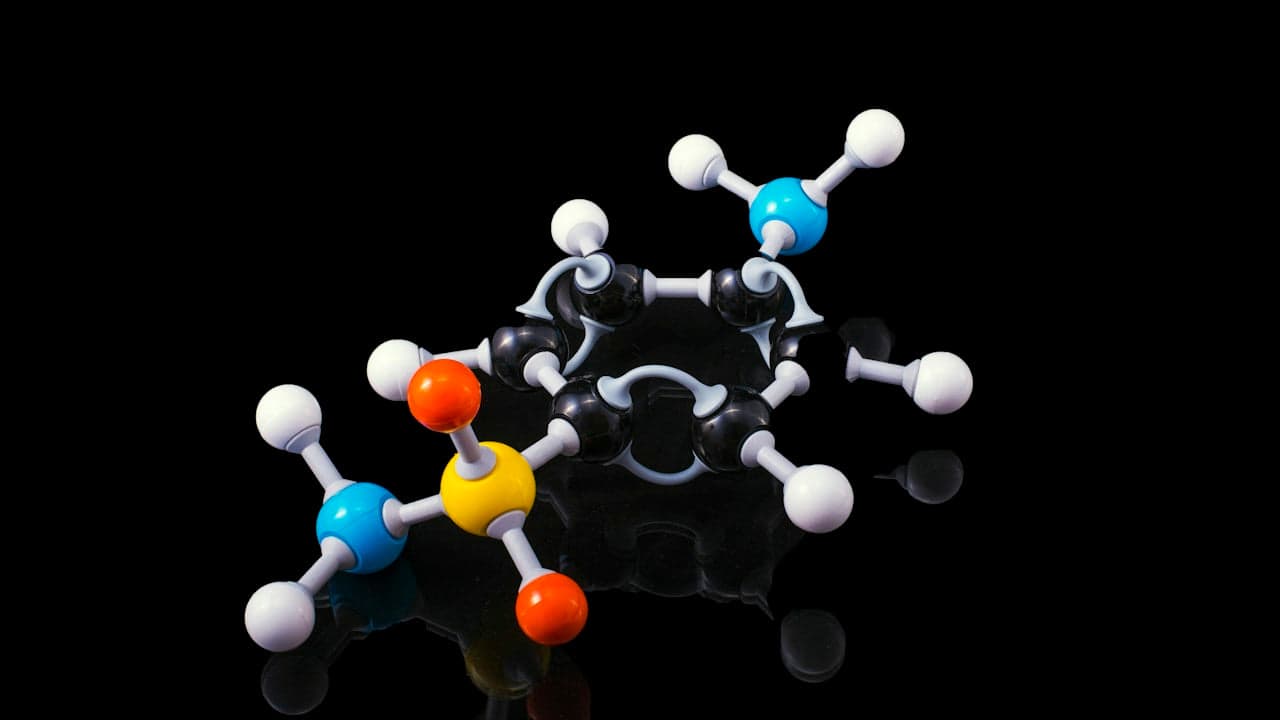
In October 2026, chemists unveiled a method to separate mirror-image molecules that differ solely by the spatial arrangement of hydrogen and deuterium isotopes. This scientific innovation provides a targeted chemical route to resolve isotopic enantiomers from a racemic mixture. As reported by [C&EN – Chemical & Engineering News](https://cen.acs.org/analytical-chemistry/separations/isotope-chirality-hydrogen-deuterium-catalyst/104/web/2026/10?sc=230901_cenrssfeed_eng_latestnewsrss_cen), the process overcomes a classic separation barrier where target molecules exhibit nearly identical physical characteristics.
Exploiting bond strength for isotopic separation
Distinguishing between molecules whose chirality arises only from isotopic substitution is one of the most subtle challenges in synthetic chemistry, marking a noteworthy milestone in chemical innovation. According to C&EN – Chemical & Engineering News, the reported method relies on a ruthenium-mediated chemical reaction designed to discriminate between hydrogen and deuterium. By taking advantage of the inherently stronger carbon-deuterium bond, the reaction selectively transforms one enantiomer faster than the other, allowing researchers to enrich a single mirror-image form from an initial racemic mixture.
The structure of the chiral ruthenium-salen catalyst
The central driver of this molecular invention is an optimized chiral ruthenium-salen catalyst detailed by C&EN – Chemical & Engineering News on October 19, 2026. The catalyst structure features a central ruthenium atom coordinated to nitrogen and oxygen atoms within a multiring framework. Extending outward from this coordination sphere are aromatic rings carrying pentafluorophenyl groups, denoted as Ar substituents, which establish the defined stereochemical environment necessary to recognize isotopic differences.
Significance for stereochemical resolution
Molecules that possess chirality based entirely on mass differences between isotopes usually present identical steric footprints, making conventional kinetic resolution difficult. The development highlighted by C&EN – Chemical & Engineering News shows that catalytic systems can be engineered with sufficient sensitivity to convert minor kinetic isotope effects into practical enantiomeric enrichment, opening promising pathways for patent protection and broader industrial adoption.
Read also on The Patent: Mary Jo Ondrechen Receives the 2026 Ely S. Parker Award · Most read news of the week: 17 April