China tests experimental submersible trimaran warship
The 65-metre prototype built in Guangzhou combines submerged transit with surface-launched missile racks.
By Letizia Giugliano
2 min readHuman-Edited, AI-Assisted
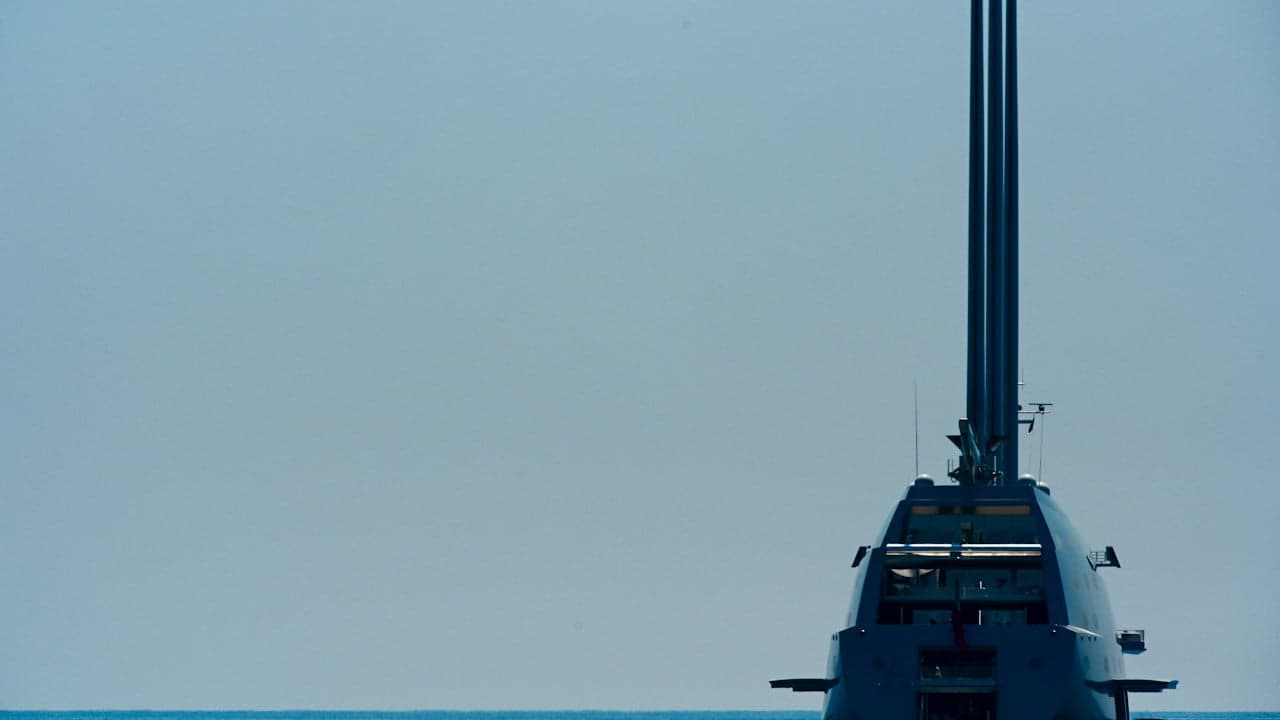
Naval shipbuilders in China are testing an uncrewed missile vessel at Huludao on the Bohai Sea that conceals its hull beneath the surface before emerging to fire. The experimental trimaran design measures roughly 65 metres in length and reflects a growing convergence of naval engineering and autonomous robotics.
A three-hull design tailored for firing stability
The vessel, constructed at the Huangpu shipyard in Guangzhou, is a notable naval innovation that relies on an unusual trimaran structure where two outrigger hulls flank the stern instead of running the entire length of the craft. According to imagery analysis reported by Interesting Engineering, this aft placement helps stabilize the platform as heavy weapons shift weight upward. The core vessel can run with its main hull submerged, using depth markings on the bow and sail to gauge submersion while a visible snorkel feeds air to diesel engines below the waterline.
Horizontal launch tubes that rise to the surface
Instead of using the standard vertical launch cells found on conventional destroyers, this naval prototype stores its missile tubes horizontally inside two central compartments. Naval analyst H. I. Sutton identified at least eight visible tubes in recent imagery, with matching twin bays pointing to an estimated payload of 16 to 18 missiles. To launch, the ship must surface, open protective hatches, and elevate the canisters into a firing posture, reviving an operational sequence reminiscent of Soviet Juliett-class submarines.
Compact hull volume points to uncrewed missions
Ship-design specialist Rachel Pawling calculated that the vessel displaces approximately 900 tonnes when fully submerged. Because the missile magazines occupy most of the internal volume, almost no space remains inside for living quarters, indicating that the platform is built to operate without a permanent onboard crew. A small open bridge situated atop the sail provides space for a pilot during harbour navigation, but during combat missions the vessel is expected to act as an offboard arsenal ship guided by robotics and external data networks.
Read also on The Patent: Rockefeller University Engineers TrUDI Platform for Deep Brain Imaging · MIT engineers build a snake-inspired soft robot to explore the small intestine