

MIT engineers build a snake-inspired soft robot to explore the small intestine
Kirigami-patterned scales and multi-chamber pneumatic actuators help the device navigate slippery tissue to biopsy polyps and deliver drugs.
By Giovanni Sapere
2 min readHuman-Edited, AI-Assisted
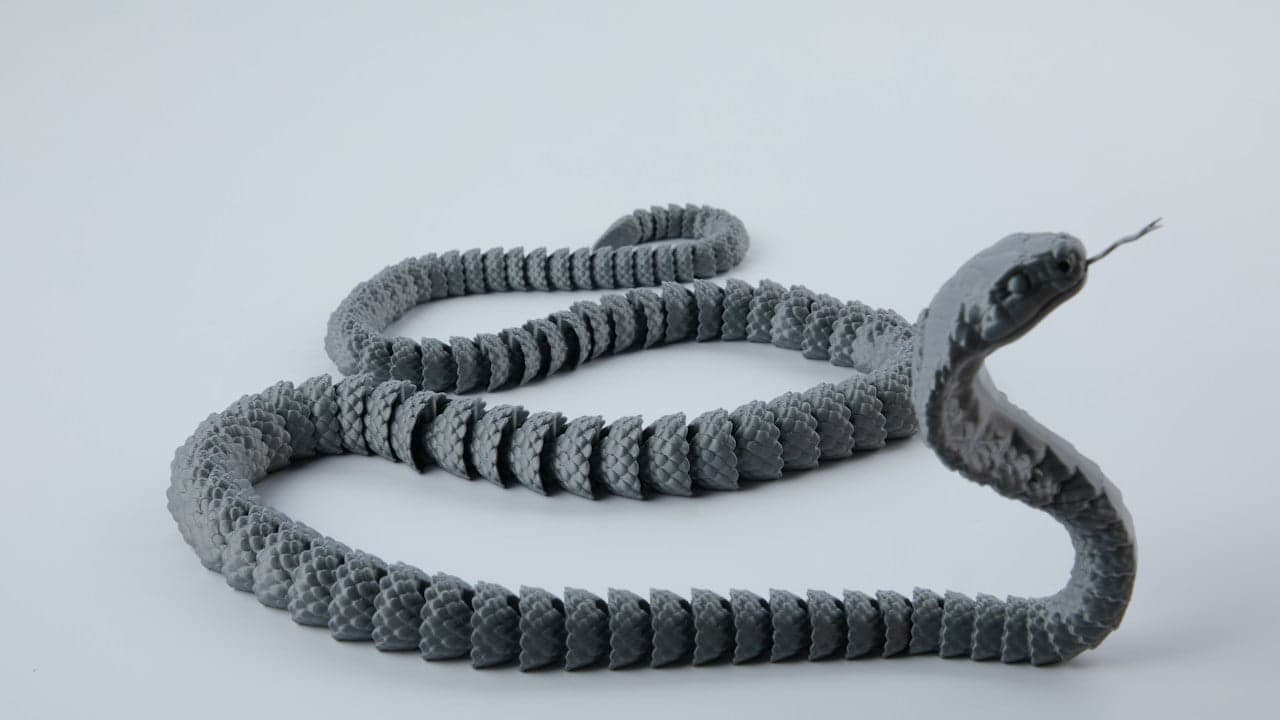
Engineers at the Massachusetts Institute of Technology have built a flexible robotic enteroscope designed to navigate the narrow curves of the human small intestine. The new system combines soft robotics with snake-like locomotion to inspect tissue, apply medication and remove small polyps deep inside the digestive tract.
Navigating 20 feet of narrow digestive tract
The human small intestine measures more than 20 feet (6.1 meters) in length and roughly 1 inch (2.5 centimeters) across, making it one of the most challenging regions of the body for clinical inspection. Typical clinical examinations rely on double-balloon enteroscopy, a slow procedure where medical staff repeatedly inflate and deflate two balloons to pull an instrument through the digestive tube, as reported by MedicalXpress.
To automate and speed up this task, senior author Giovanni Traverso, a professor of mechanical engineering at MIT and gastroenterologist at Brigham and Women's Hospital, developed an alternative propulsion concept with his colleagues. Traverso and co-lead authors Binbin Ying, Ahmad Mujtaba Jebran and Sahab Babaee detailed the medical device prototype in the journal Science Robotics.
“By using kirigami sleeves to enhance surface friction, the robot can generate localized tissue engagement traction for locomotion without relying on excessive stretching of the delicate small intestinal tissue.”
— Ahmad Mujtaba Jebran, MIT graduate student
Kirigami scales and pneumatic steering
The tubelike device mimics how a snake moves by contracting muscles along alternate sides of its body. The researchers built multifunctional pneumatic actuators containing four chambers that inflate in specific combinations, allowing the body of the machine to bend or extend in any direction on demand, according to MedicalXpress.
To keep from slipping across moist intestinal mucosa, the team turned to kirigami, the Japanese craft of cutting and folding flat sheets. The front and rear sections feature inflatable anchoring balloons surrounded by kirigami sleeves. When the balloons expand, tiny 3D needles pop outward to grip the intestinal walls without tearing delicate lining, providing traction while the inner body advances.
Biopsies and drug delivery demonstrated in trials
The tethered soft robot can enter the digestive tract through either the mouth or the rectum, guided by an operator using an external wireless joystick. Embedded along the flexible tube are miniature tools: an optical camera for real-time visualization, a mechanical tissue clip for taking biopsies or excising polyps, and a specialized sprayer for localized drug delivery.
During animal testing, this robotic invention successfully traveled 6.5 feet (about 2 meters) through the small intestine, as noted by MedicalXpress. The engineering team is now refining the robotic navigation software to achieve higher levels of automation during endoscopic evaluations.
Read also on The Patent: MIT Origami-Inspired Metal Design Enables Rapid Emergency Shelters · JAXA Launches MMX Mission to Retrieve Martian Moon Samples by 2031