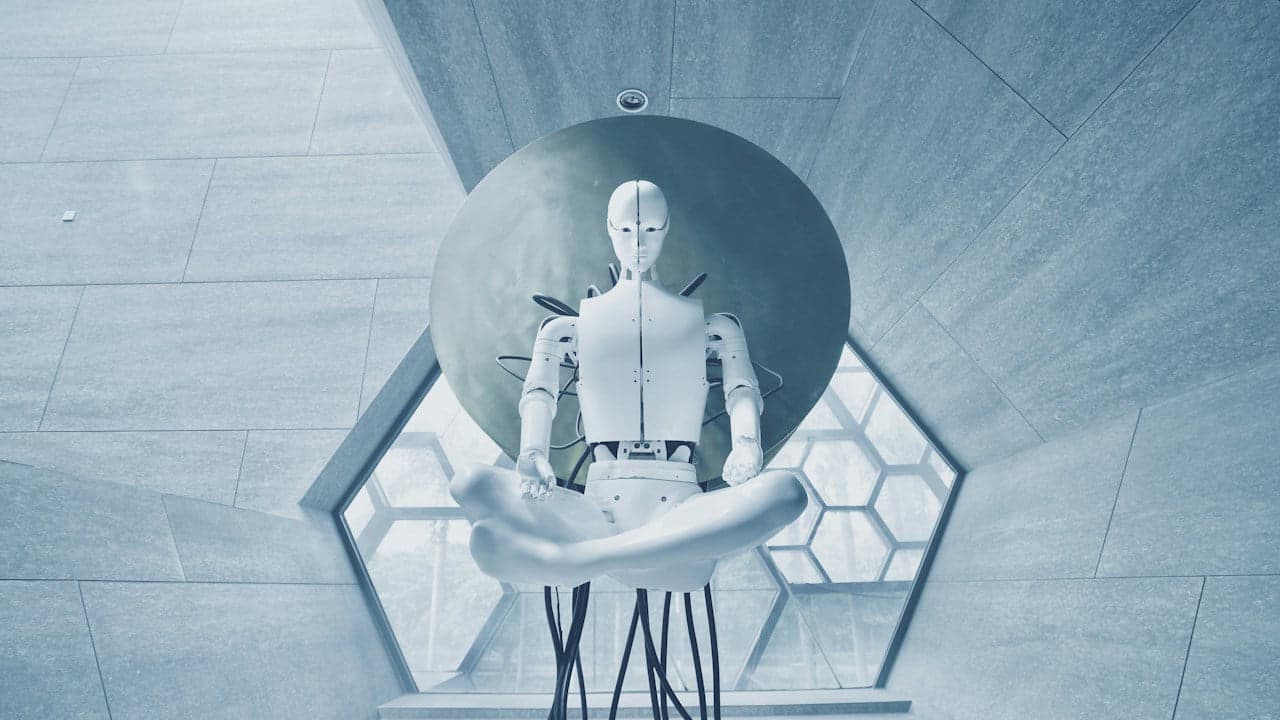

Dexterity and Motion Control Advance Across Quadrupeds and Humanoid Robots
From foot-based manipulation to stabilized trajectory algorithms, recent developments demonstrate how intelligent mechanics are moving beyond basic automation.
By Letizia Giugliano
2 min readHuman-Edited, AI-Assisted
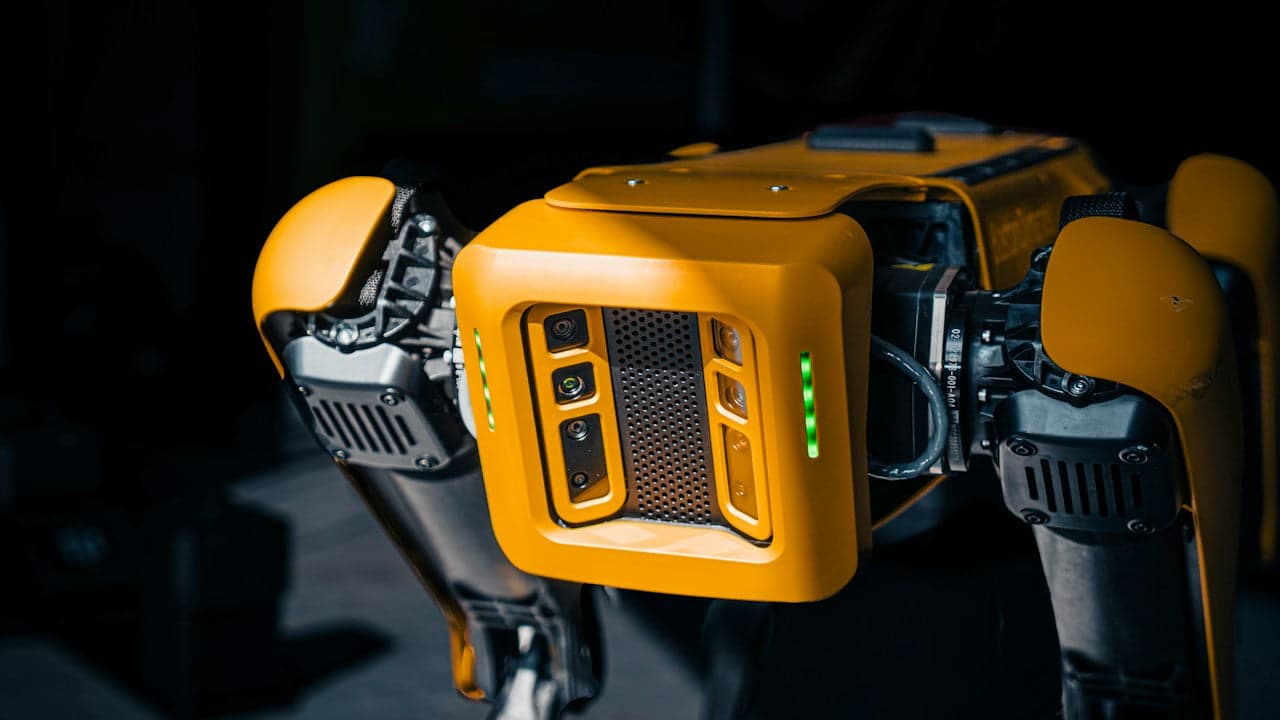
Recent milestones in robotics highlight how machines are mastering delicate manipulation and dynamic mobility without relying on conventional human-like approaches. Engineering reports from October 2026 demonstrate that quadruped platforms, stabilization frameworks, and humanoid systems are rapidly closing the divide between sensory perception and physical action. These developments signal a wider shift toward resilient, high-speed machines designed for complex physical tasks.
Leg-driven dexterity tackles complex spatial puzzles
Legged robots are proving capable of intricate physical manipulation without dedicated arms or grippers. In an unprecedented demonstration reported by Interesting Engineering, the four-legged robot ANYmal successfully solved a giant Rubik's Cube using exclusively its feet. The task required coordinating physical balance while systematically reorienting puzzle faces, achieved through an integrated pipeline of standard Rubik's Cube solvers, computer vision, and reinforcement learning.
Mathematical frameworks curb tracking errors and instability
Control software is evolving alongside mechanical dexterity to prevent erratic behaviors in dynamic robots. Researchers introduced CARL, a control framework that unites reinforcement learning with mathematical contraction theory, as reported by Interesting Engineering. The methodology limits trajectory tracking errors and instability, yielding a 15% performance improvement for both walking and flying robots. In parallel, sensor integration is becoming structural; an MIT development called X-Hinges uses specialized software to print flexible hinges, conductive traces, and sensors together, tracking mechanical motion across three axes in real time.
Humanoid architectures reduce latency and mechanical bulk
Humanoid platforms are undergoing rapid design iterations to enhance physical responsiveness and spatial awareness. Manufacturer NEURA unveiled a humanoid design that is 20% lighter than predecessor systems, incorporating touch and force sensing alongside independently responsive Smart Limbs, according to Interesting Engineering. On the computing side, the humanoid platform KINO-2 cut model processing latency by 8x using NVIDIA hardware, connecting human movement demonstrations directly to warehouse navigation and handling skills. Similarly, home-oriented systems like Voxel apply animation-trained machine learning to manage variable slopes, unexpected pushes, and gravity.
Manufacturing scale and industrial endurance targets
The transition from prototype demonstrations to repetitive industrial deployment is driving higher volume targets and durability testing. As documented by Interesting Engineering, Unitree introduced its H2-X humanoid with a stated eight-hour standing duration, though loaded performance specifications remain pending. Concurrently, Tesla is accelerating the production infrastructure for its Optimus robot, aiming toward a manufacturing target of 20,000 units per week by 2027 supported by expanded battery assembly and dedicated computing clusters.
Read also on The Patent: Macaques Learn Germ Caution Following Viral Outbreak in Texas Study · Lab-Grown Neurons Decode Braille and Steer Robot Dogs