EPFL Shrinks Ultra-Fast Blue Laser Onto a Photonic Chip
The compact device tunes its frequency one million times per second for underwater links and sensing.
By Letizia Giugliano
2 min readHuman-Edited, AI-Assisted

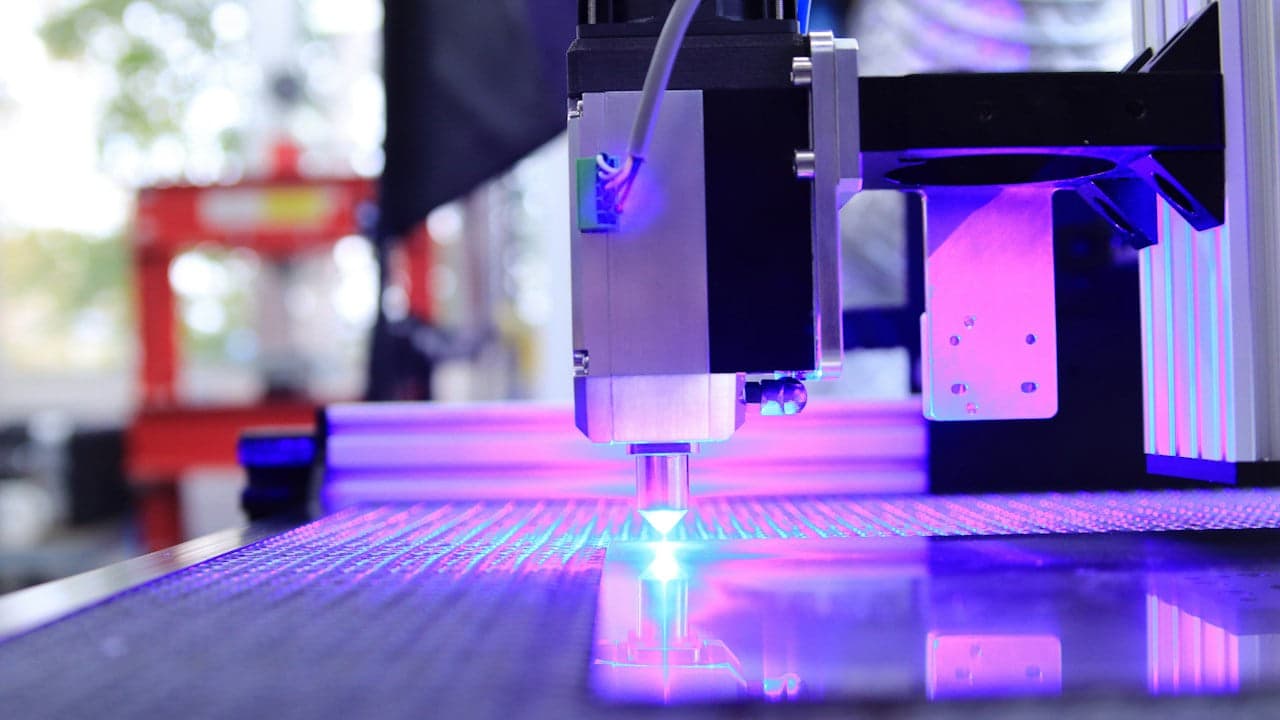
Engineers at EPFL in Switzerland have mounted a high-precision blue laser onto a miniature photonic chip, keeping frequency variation below 30 kilohertz while tuning rapidly. The compact invention sends optical signals through water and identifies airborne particles that standard infrared beams miss.
Microscopic resonators replace benchtop optics
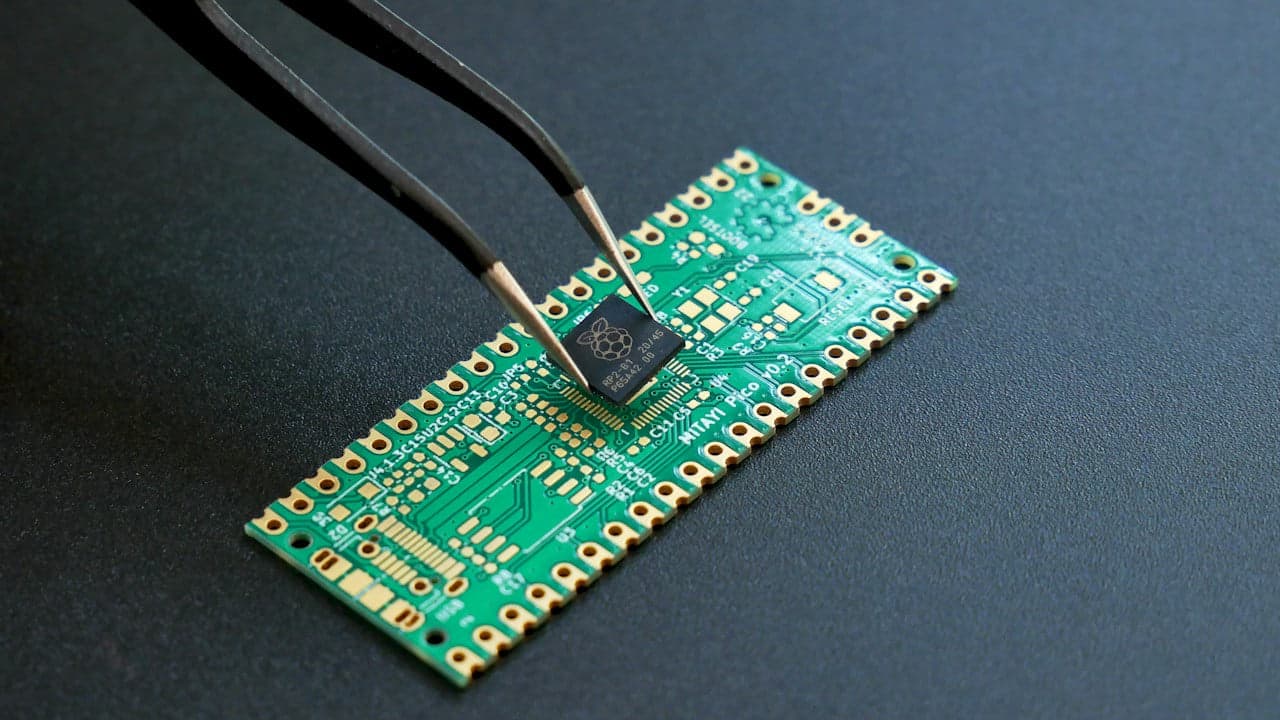
Precise optical communication and sensing systems typically rely on bulky laboratory hardware to keep light steady. Shifting that performance onto microscopic circuits is difficult because short blue wavelengths scatter easily when they hit tiny manufacturing flaws. To overcome this limitation, researchers at EPFL in Switzerland paired a standard blue laser diode with a custom photonic chip, as reported by Interesting Engineering.
The chip guides light through an optical structure designed with a thickness of just 25 nanometers to limit scattering losses. At its core sits a microscopic ring-shaped resonator. The ring acts as an optical filter: it selects a precise frequency and directs part of the light back into the laser to lock the beam. To provide rapid control, the team added aluminum nitride elements that flex when an electrical voltage is applied, changing how light moves around the ring.
Frequency tuning across 900 megahertz
The operating prototype emits light at a wavelength of approximately 461 nanometers. In its steady state, the device maintains a linewidth below 30 kilohertz, which ensures high spectral stability against background noise.
When electrical signals are fed to the aluminum nitride components, the chip shifts operating modes. The system can sweep its frequency across more than 900 megahertz and repeat those adjustments up to one million times each second. This fast modulation allows operators to encode data streams into frequency shifts without disrupting the quality of the beam, according to study details published in Nature Photonics.
Transmitting images through water and detecting airborne smoke
Blue light penetrates water much farther than infrared beams and reflects more readily off microscopic airborne particles. The EPFL team verified these properties in two separate laboratory experiments detailed by Interesting Engineering.
In the first trial, the researchers converted a digital image of the EPFL logo into laser frequency variations and transmitted it across a 30-centimeter column of water. A detector on the other side captured the light and reconstructed the image without errors. In a second test, the team directed the blue beam at candle smoke in ambient air. The blue light registered a clear signal from the suspended particles, whereas a traditional optical communications laser operating at 1,550 nanometers showed no measurable response under the same conditions.
What comes next for field deployment
The research team noted that their smoke trials demonstrated particle sensitivity without providing quantitative concentration measurements, leaving calibrated pollution monitoring as an area for further development. Beyond underwater communication channels, the researchers expect this compact hardware to serve in portable environmental monitors, optical atomic clocks, and hardware for quantum computing, all of which require stable short-wavelength sources built without room-scale laboratory racks.
Read also on The Patent: A graphene device harvests ambient radiation to power battery-free sensors · Interactive Touchscreen Woven Directly into Garment Sleeve