NIST Microcomb Chip Uses Dual Lasers for Portable Atomic Clocks
A compact optical frequency comb developed with the University of Maryland removes bulky stabilization hardware to advance GPS-free navigation.
By Giovanni Sapere
2 min readHuman-Edited, AI-Assisted
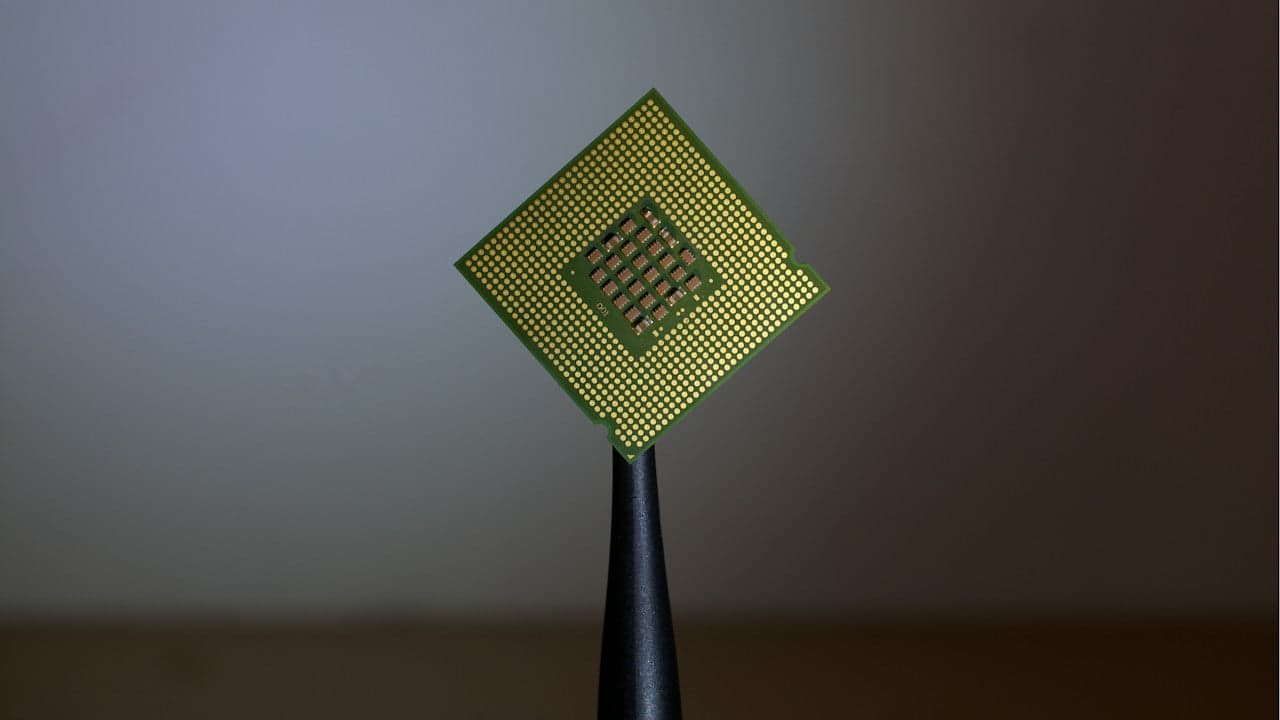
Researchers at the National Institute of Standards and Technology and the Joint Quantum Institute have demonstrated a chip-based optical frequency comb powered by two lasers. This hardware innovation generates stable reference frequencies without the power-hungry external equipment that previously confined such instruments to laboratories. The development marks a critical step toward shrinking optical atomic clocks for autonomous vehicles, resource surveying, and environments where satellite timing is unavailable.
Dual lasers replace bulky laboratory hardware
The newly demonstrated optical frequency comb functions as a high-precision ruler for light, generating evenly spaced frequencies to measure optical signals with extreme accuracy. As reported by Interesting Engineering, conventional comb systems rely on complex supporting hardware to keep optical outputs stable. By routing light from two lasers into the same optical cavity, researchers at the National Institute of Standards and Technology eliminated the need for those bulky external control instruments. This technical advance represents a notable innovation in photonics, tackling a long-standing barrier in the miniaturization of optical instruments.
Microresonator architecture on a single chip
At the heart of the invention is a microscopic ring-shaped structure called a microresonator. According to Interesting Engineering, light circulating through the ring establishes the required optical interactions to produce the frequency comb. The collaborative team from NIST and the Joint Quantum Institute, a research partnership with the University of Maryland, fabricated test chips housing as many as 300 microresonators. Each tiny ring provides the necessary optical environment to generate clean signals, allowing each inventor involved to explore scalable device configurations on a single semiconductor chip.
Precision timing beyond satellite signals
The development targets optical atomic clocks, which track time via the rapid vibrations of atoms at optical frequencies. Satellite navigation systems like GPS rely on synchronized timing to calculate geographic positions, but those signals can be disrupted, jammed, or blocked underground and underwater, as highlighted by Interesting Engineering. Compact optical clocks equipped with the new chip design could supply onboard timing references for autonomous drones, submarines, and mineral exploration vehicles. By addressing the power and footprint limitations of earlier frequency combs, the invention provides a path toward autonomous positioning systems that operate without external connectivity.
Engineering challenges on the path to deployment
While the experimental chips prove the two-laser concept, Interesting Engineering emphasizes that the demonstration covers only the frequency-comb component rather than a functional atomic clock. To build deployable field systems, an inventor or engineering team must still integrate the chip with atomic reference packages, laser drivers, and electronic control circuits. Future research will focus on translating these laboratory benchmarks into rugged hardware that satisfies the size, power, and durability demands of mobile transport platforms.
Read also on The Patent: Aurelius Mounts Archimedes Laser on American Rheinmetall Ox Robot · Living 140 years: HUNZA the longest-living people in the world.