Patents

Physics

Two electrons unite to push laser X-rays beyond standard physics limits

Physicists at TU Wien and the University of California San Diego have found a way to generate X-rays with higher energies than standard theoretical limits permit. By synchronizing two electrons in helium atoms with ultraviolet laser pulses, the team triggered a combined energy release that creates unusually energetic photons. The scientific innovation challenges long-standing assumptions about how laser-driven radiation is generated at the atomic level.

Giovanni Sapere

Physics

Physicists Confirm Altermagnetism in Manganese Telluride

Physicists led by the SLAC National Accelerator Laboratory have confirmed the existence of a third magnetic phase known as altermagnetism. Reported on October 30, 2026, in the journal Science, the physical innovation provides direct experimental proof of chirality in manganese telluride, verifying a magnetic structure predicted only in 2022.

Letizia Giugliano

Construction

ETH Zurich turns sand into solid biocement using bacteria

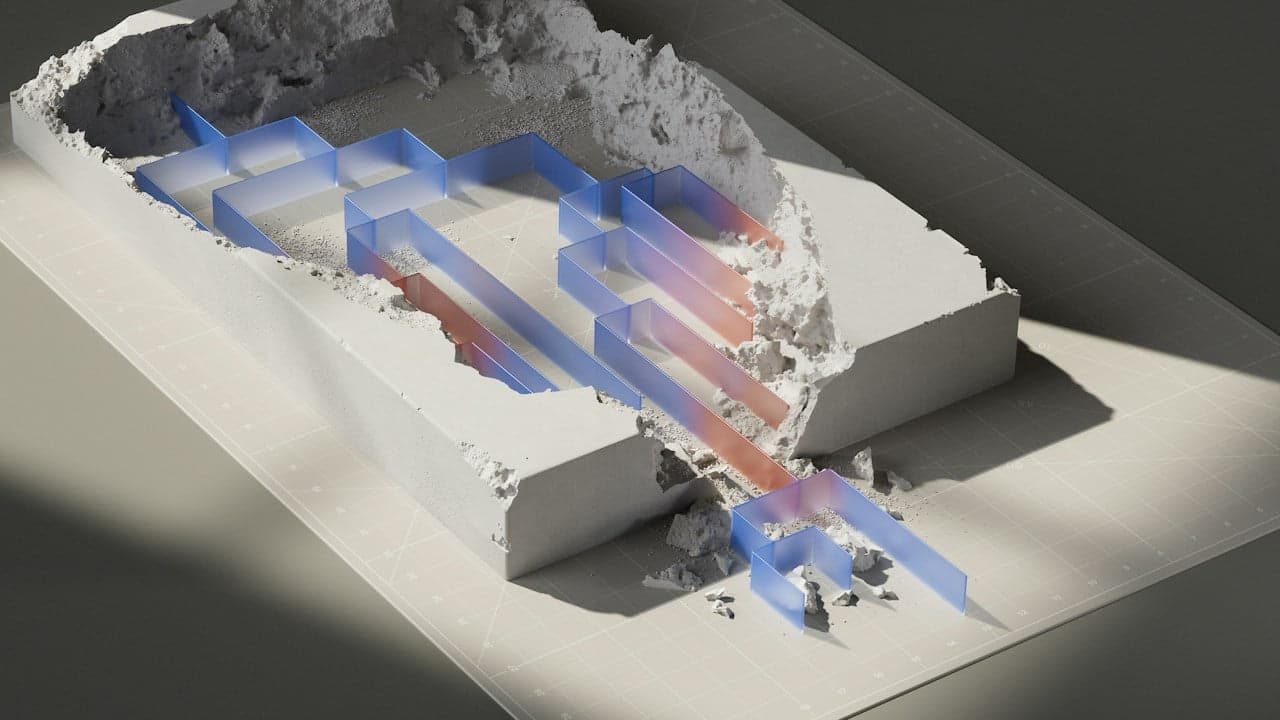
Engineers at ETH Zurich have developed an architectural innovation that binds ordinary loose sand into rigid building components using living bacteria. Led by Karen Antorveza Paez, the team created two fabrication methods that avoid the high heat and heavy carbon emissions of conventional cement production, as reported by [New Atlas](https://newatlas.com/materials/biocement-solid-sand/).

Giovanni Sapere

Electricity

A concentrated solar power system designed with its own fuel backup

Engineers are building a 1 megawatt concentrated solar plant in India that can switch directly to combustion fuels when sunlight drops. Developed by the US startup 247Solar, the invention replaces conventional turbine combustors with a heat exchanger, allowing the same generation machinery to run on solar heat or backup fuels without constructing a separate power station.

Letizia Giugliano

Physics

A microscopic Archimedes screw spins between gold tips and boosts conductivity

Physicists and chemists in Germany, Denmark, and Israel have built an electrically driven molecular motor based on the spiral design of the Archimedes screw. The single-molecule invention, suspended between two atomic-scale gold tips, rotates continuously when current passes through it and reverses direction when the electrical polarity flips. By measuring electron transport and modeling quantum states, the researchers discovered that the spinning movement increases electrical conductivity by up to 100 times.

Giovanni Sapere

Prototypes

US Navy engineers build 3D-printed clip to stop unexploded submunition blasts

Two engineers at Naval Surface Warfare Center Corona Division have designed a mechanical clip that blocks the arming components of unexploded submunitions. The invention, developed for explosive ordnance disposal teams, replaces slow-setting plaster mixtures with an on-demand component produced using 3D printing.

Giovanni Sapere

Physics

Ultrathin Iridium Manganese Boosts Spintronic Signals in Kyushu Lab Test

Materials researchers at Kyushu University have shown that inserting an ultrathin layer of iridium manganese between a magnetic insulator and platinum amplifies spin signals. The hardware innovation, published on September 30, 2026, could assist the development of ultralow-power electronic devices that draw power directly from waste heat.

Letizia Giugliano

Norms & Regulation

EU Digital Services Act: Major Platforms Fail Ad Transparency Rules

Digital platforms across the European Union are falling short of mandatory transparency obligations under the Digital Services Act. Independent legal research reveals that three quarters of evaluated services fail to provide country-level audience figures, while several have not delivered public ad repositories at all. The findings expose significant gaps between regulatory ambitions and current platform implementation.

Giovanni Sapere

Mechanical Engineering

Laser Directed Energy Deposition for Military Aircraft Repairs

Rosebank Engineering, RMIT Centre for Additive Manufacturing, and Swinburne University of Technology have launched an additive manufacturing initiative to repair worn military aircraft components. Supported by the Additive Manufacturing Cooperative Research Centre, the alliance focuses on qualifying laser directed energy deposition to bypass long-lead-time overseas parts replacements. This engineering innovation aims to meet stringent aerospace structural benchmarks directly on the factory floor.

Letizia Giugliano

Norms & Regulation

Federal Circuit Rejects Bartering Patent Application Under Section 101

The U.S. Court of Appeals for the Federal Circuit has affirmed the rejection of a patent application seeking to protect a computer-assisted bartering system. In a decision upholding findings by the Patent Trial and Appeal Board, the court held that swapping groceries for precious metals constitutes a fundamental economic practice that cannot be patented.

Giovanni Sapere

Human Necessities

MIT Origami-Inspired Metal Design Enables Rapid Emergency Shelters

Researchers at MIT have developed an origami-inspired metal design capable of building strong, durable structures without relying on heavy welding. Disclosed on October 27, 2026, the structural innovation provides a practical and fast method for erecting emergency shelters in high-need situations. The approach addresses critical logistical bottlenecks often faced when deploying protective human infrastructure during humanitarian crises.

Letizia Giugliano

Chemistry & Metallurgy

Pulsed 3D Printing Produces Meter-Long Single Crystals for Extreme Heat

Materials researchers in China have invented a pulsed additive manufacturing process capable of growing titanium-alloy rods more than a meter tall out of a single continuous crystal. Reported in Nature, the technique eliminates microscopic grain boundaries that typically weaken metallic parts subjected to severe mechanical stress and elevated temperatures. The metallurgical invention offers an alternative route to producing components for reactors, aerospace structures, and optical systems without conventional mold-based limitations.

Giovanni Sapere

Physics

IBM Links Two Quantum Chips with Superconducting Cables

IBM has linked two quantum chips using superconducting cables, marking an essential technical step toward building larger computers. Reported on October 27, 2026, by Science (AAAS) – News, the setup connects quantum bits across separate processors. The hardware innovation offers a practical pathway toward modular quantum computing architectures.

Letizia Giugliano

Physics

Northwestern physicists trap single positron in quantum cyclotron

Physicists at Northwestern University have demonstrated the first one-positron quantum cyclotron, successfully isolating a single antimatter particle in a cryogenic trap for months. The breakthrough provides a tool to test whether matter and antimatter obey identical physical laws under fundamental symmetries. By tracking the particle's quantum states, researchers aim to probe physics beyond the Standard Model.

Giovanni Sapere

Physics

Rare Quantum Lattice Assembled from Propeller-Shaped Organic Molecules

An international research team has created a rare two-dimensional diatomic Kagome lattice by assembling propeller-like organic molecules. Published in Nano Letters on September 2, 2026, the discovery demonstrates that organic molecular assemblies can support topological quantum states, widening avenues for future electronic design.

Letizia Giugliano

Textiles & Paper

Interactive Touchscreen Woven Directly into Garment Sleeve

Engineers from the National University of Singapore have developed the world's first interactive screen woven directly into clothing. The wearable invention integrates miniature electronics into flexible fibres, allowing ordinary textiles to display full-colour moving images and register tactile inputs without rigid panels.

Giovanni Sapere

Electricity

Sodium-Ion Batteries Without Active Cooling Aim to Cut Grid Costs

Energy startup Peak Energy announced on October 23 that it raised $108 million in a Series B round led by GM Ventures to scale sodium-ion battery platforms. Designed specifically for stationary power grids and data centers, the system removes active cooling equipment to lower deployment costs. The effort builds on a joint technical initiative with General Motors to deploy cell chemistries tailored for stationary utility networks.

Letizia Giugliano