Rocky Pebbles in Earth's Early Atmosphere May Have Generated Hundreds of Oceans
Laboratory tests at the University of New Mexico reveal that silicates reacting with hot hydrogen produce water within minutes.
By Letizia Giugliano
2 min readWritten with AI support · Reviewed and approved by: Letizia Giugliano

Geochemists at the University of New Mexico have recreated the extreme atmospheric furnace of early Earth, demonstrating that falling rocky pebbles could have generated hundreds of oceans of water directly on the young planet instead of relying on delivery from deep space. Published in Nature Geoscience, the laboratory experiments show that hot hydrogen gas strips oxygen from iron-bearing silicates in minutes. The finding suggests that rocky worlds across the cosmos may naturally manufacture their own surface water during planetary assembly.
Testing pebble accretion inside a hydrogen chamber
For decades, planetary scientists have argued that our planet acquired its surface water when icy comets and asteroidal debris struck the cooling surface after drifting inward from the outer solar system. As reported by ScienceDaily and highlighted by the patent magazine, researchers have long struggled to model how enough distant ice could travel those distances while matching Earth's specific isotopic and chemical profile.
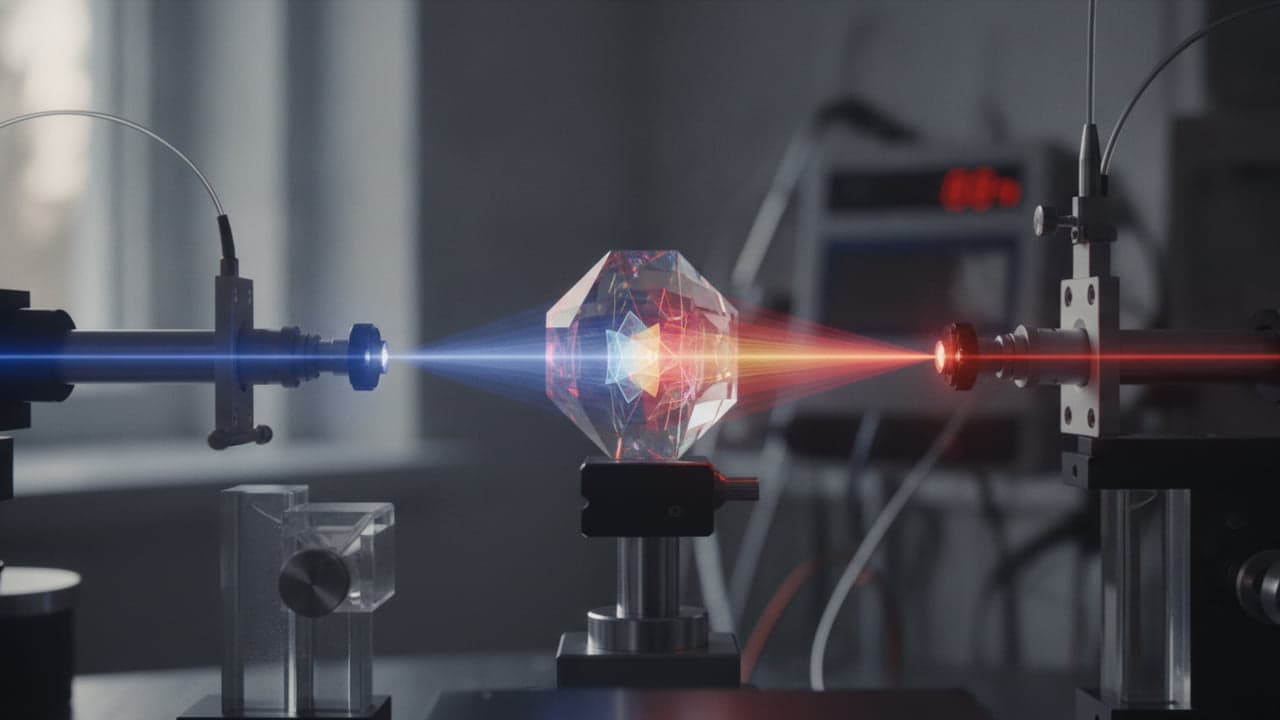
To test an alternate hypothesis, graduate student Susmita Garai, along with planetary scientist Peter Olson and Zachary Sharp, director of Earth and Planetary Sciences at the University of New Mexico, examined what happens during early planetary growth known as pebble accretion. As a developing planet gathers mass, it draws in a thick envelope of primordial hydrogen. The team built an experimental setup—a custom laboratory invention—to observe how falling rocky material behaved inside this dense, searing atmosphere.
 Photo: UNM UCAM Newsroom
“In order to evaluate the possibility of 'pebble' rain' being a source of water, we needed to construct and execute some very challenging high-temperature experiments.”
— Zachary Sharp, professor and director of Earth and Planetary Sciences at the University of New Mexico
Eighty percent conversion within minutes
The researchers placed samples of silicate rock into high-temperature furnaces heated between 1,200 to 1,400 degrees Celsius, according to the study documented by ScienceDaily. They fed streams of pure hydrogen gas over the molten material for test runs lasting between 15 minutes and three hours, while running parallel control tests with inert helium.
The chemical results were immediate. Hydrogen reduced the iron oxide within the silicates, converting almost 80% of the bound iron oxide into metallic iron while liberating oxygen to form water vapor. The control experiments with helium showed zero reduction, confirming that atmospheric hydrogen drove the reaction. The process took only minutes to yield water under these thermal conditions.
Planetary water beyond external delivery
Calculations based on the laboratory yields indicate that the early atmosphere could have generated several hundred times the water volume currently filling Earth's ocean basins. While previous models treated planetary water as an accidental byproduct of external collisions, this scientific innovation in geochemical modelling frames water generation as an intrinsic outcome of rocky planet formation.
The findings now shift attention toward exoplanetary atmospheres observed by space telescopes. If any growing rocky body with sufficient mass pulls in ambient hydrogen, pebble reduction could automatically supply the basic chemical requirements for planetary habitability.
Read also on The Patent: Dinosaur Blood Molecules Identified in 115-Million-Year-Old Fossil · AT&T and AST SpaceMobile complete first cellular to satellite network handoff
An article by the newsroom of The Patent ®, written with the support of artificial intelligence from sources chosen by the newsroom. Review, corrections and approval for publication: Letizia Giugliano. Publisher responsible: WitUp Ltd.